Proof of concept: the Foldscope meets the field filter

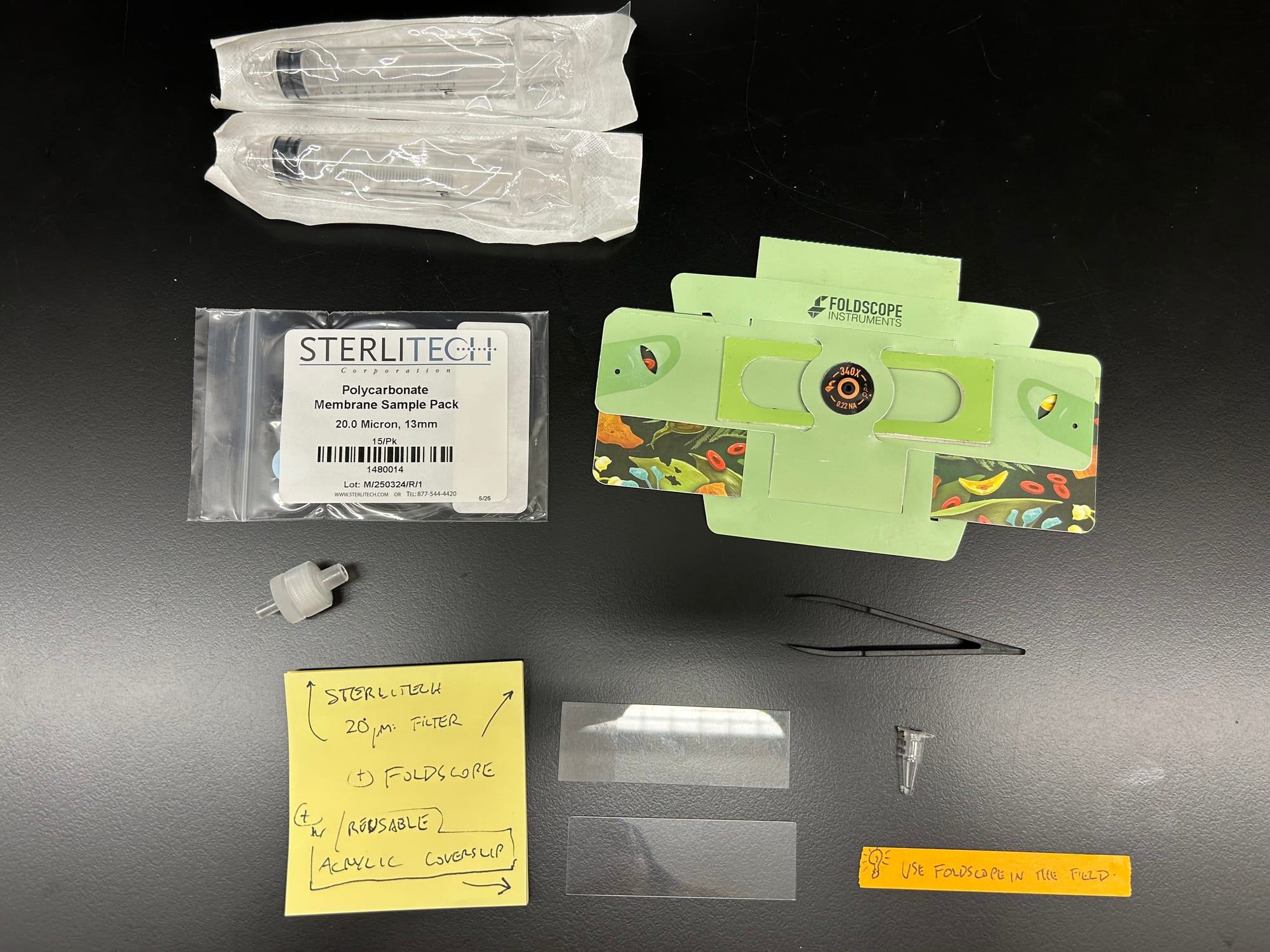
On Friday night I tried the sample filter pack Phil ordered from Sterlitech (the commercially available filtration kit field teams commonly use for schistosomiasis) to see whether it works with a Foldscope.
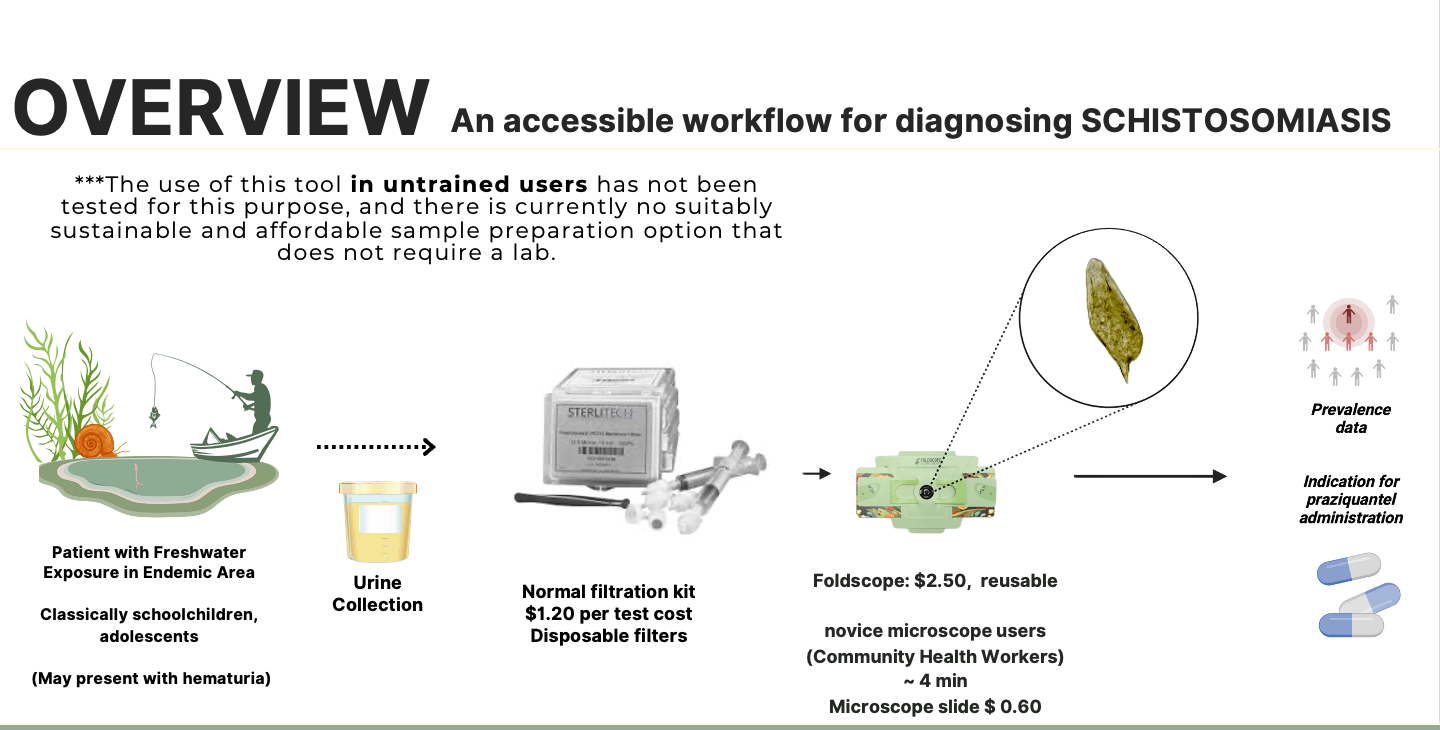
If this is your first time reading about this: schistosomiasis affects over 200 million people worldwide and leads to bladder cancer, infertility, and, in young women, a higher risk of HPV and progression to cervical cancer. It’s transmitted by worms that infect people directly through the skin in freshwater. There’s a real need for better portable diagnostics in rural areas, where the disease persists because work and daily life depend on freshwater. We’re testing whether the Foldscope — a $2 microscope from Dr. Manu Prakash and Dr. Jim Cybulski — can help community health workers diagnose it without expensive labs or equipment.
What we wanted to know
Can we take the lab out of it?
Eliminate the need for electricity and a laboratory — and, in theory, the geographic barrier to diagnosis.
Is it fast enough?
Quick enough to count as point-of-care?
Can plastic replace glass?
Can a thin, clear, reusable acrylic coverslip held with paperclips replace a commercial coverslip? Quartz and glass coverslips are fragile, expensive, not very field-friendly. And, anecdotally, they cut fingers quite often.
Nine minutes, start to finish
Our hypothesis: loaded on a glass slide and covered with a laser-cut 0.5 mm acrylic slip, a filter from the commercial kit would be compatible with a Foldscope workflow and allow rapid detection of parasite eggs in urine.
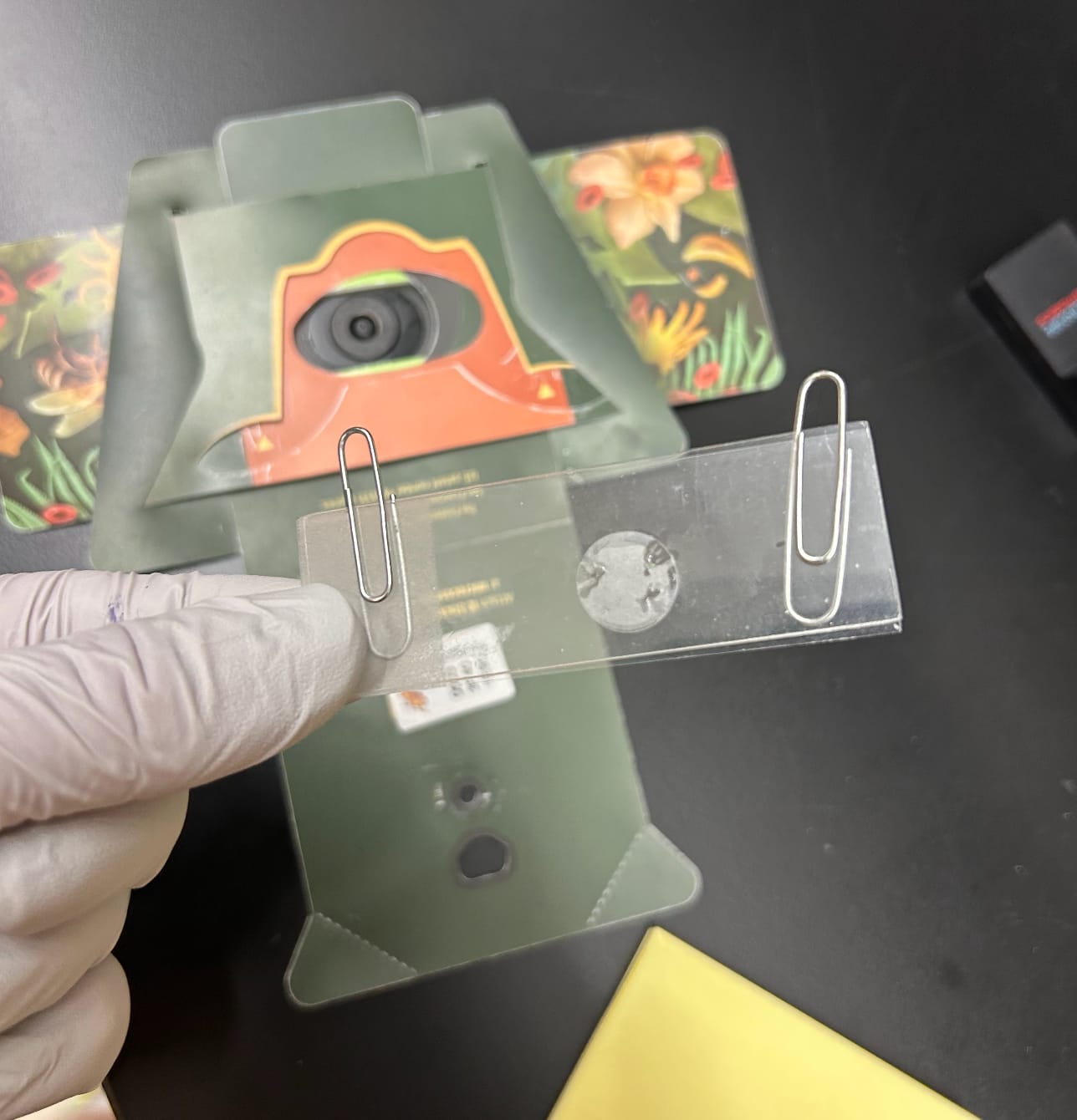
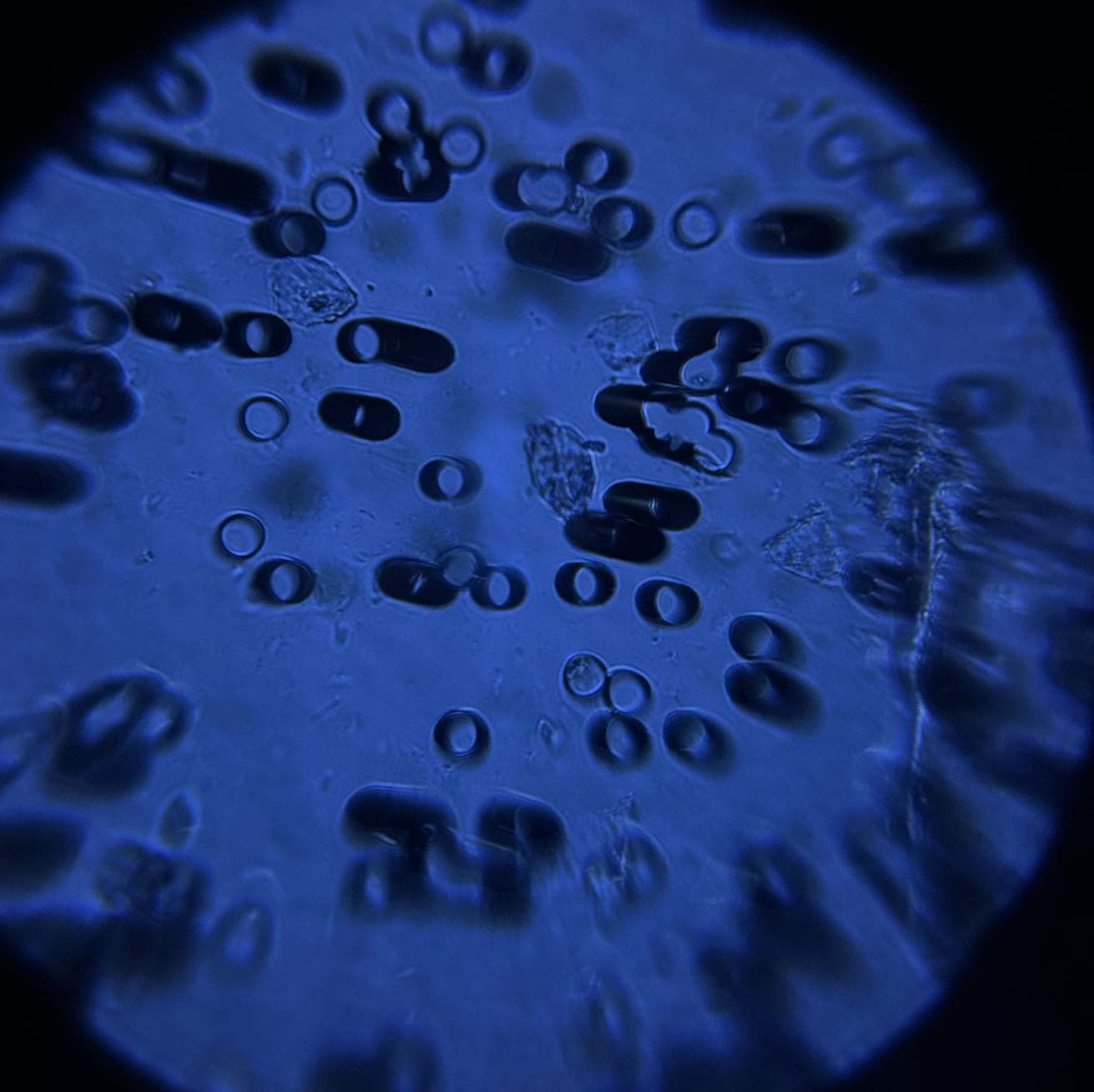
It worked. The workflow took me nine minutes from start to finish, and felt feasible and user-friendly. I found eggs after just a couple of minutes of looking through the Foldscope. We still need to repeat this and test it in the hands of inexperienced users, but it’s an encouraging first try.
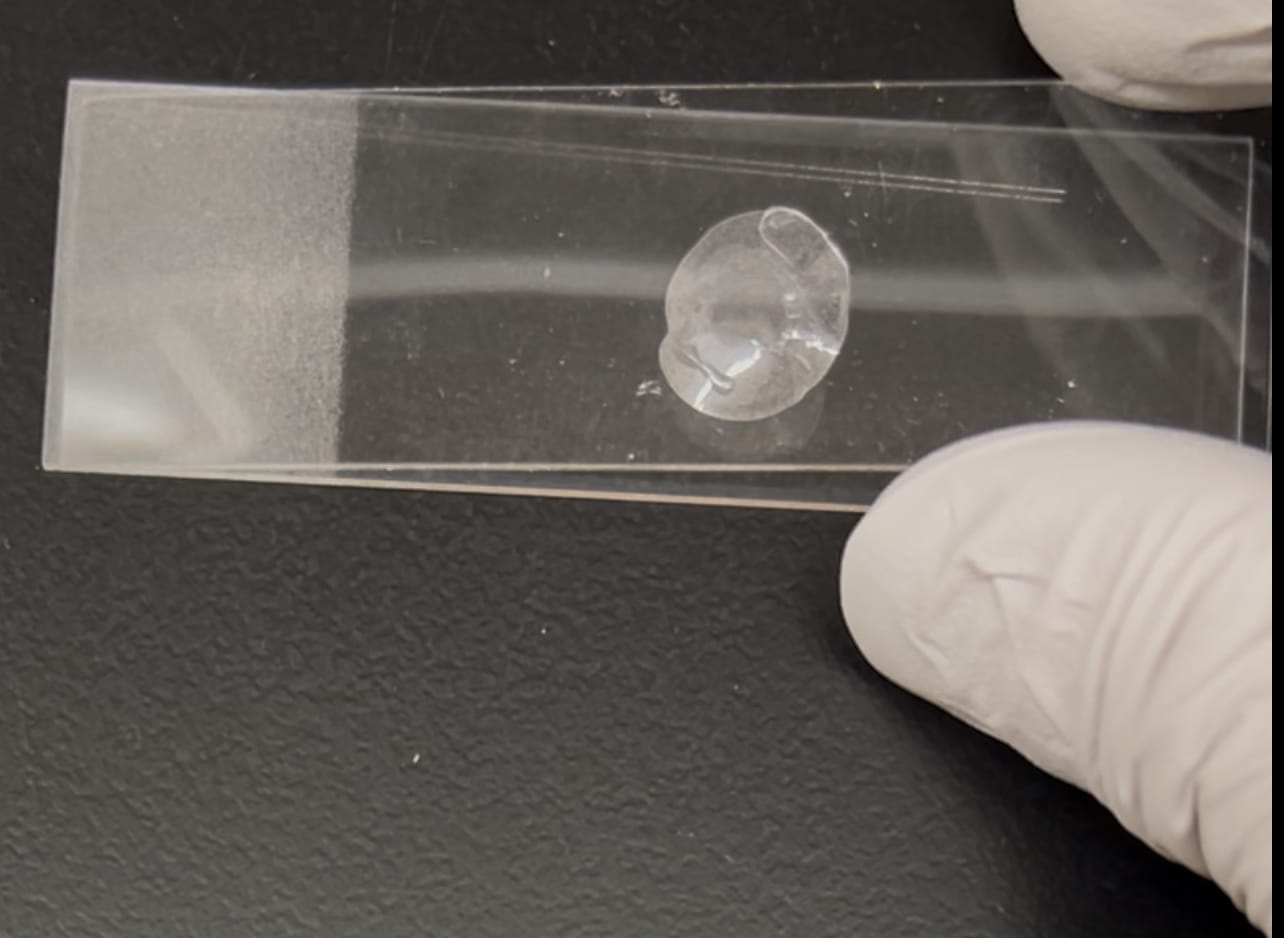
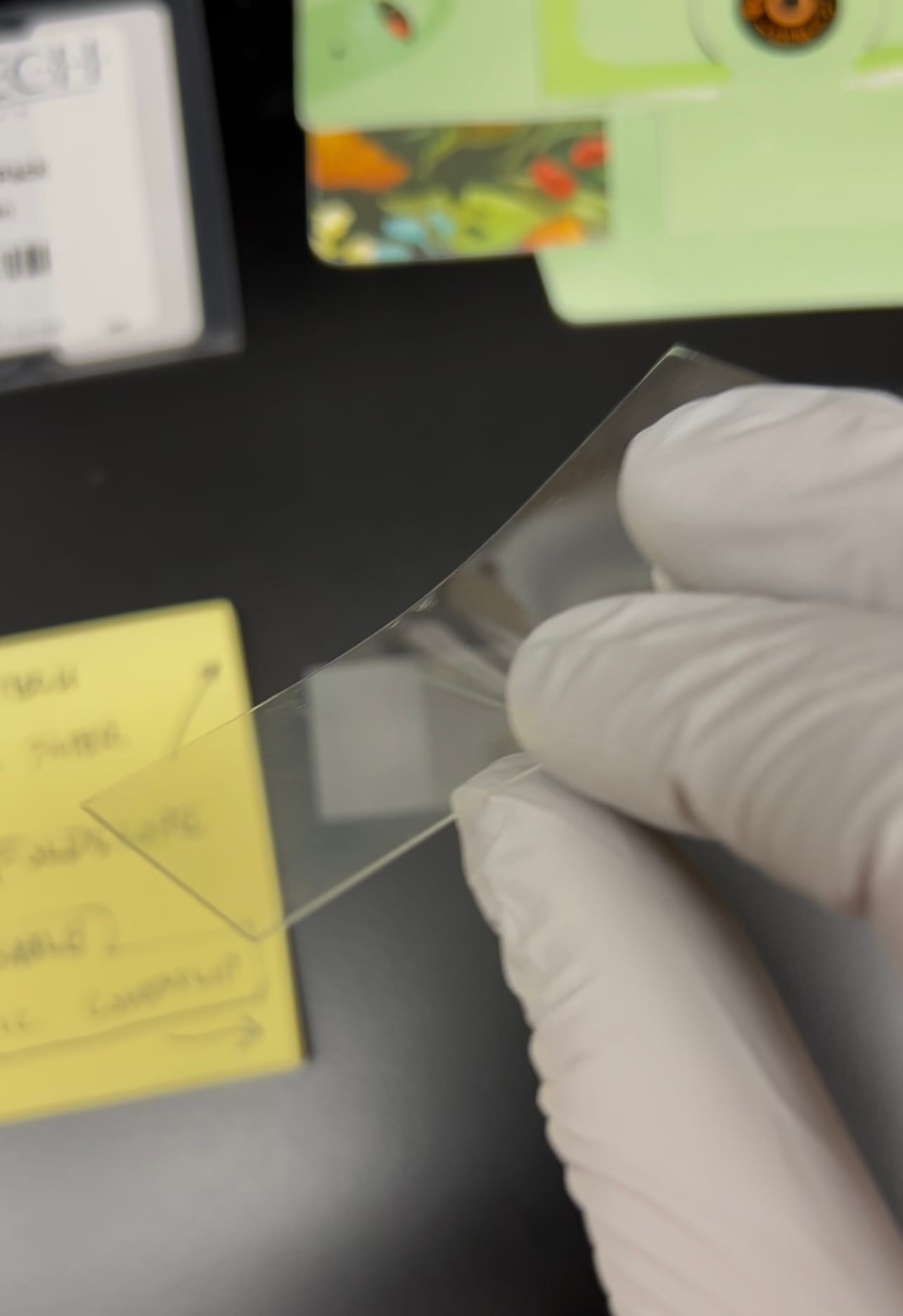
The acrylic coverslip is flexible, easy to apply, and stays put with paperclips. I didn’t notice any leaks, but that could definitely become an issue. Should we seal the sides with tape? Magnets under electrical tape?
Is the coverslip really reusable?
I cleaned the coverslip with water and a paper wipe and checked it under the microscope for leftover eggs. The first clean didn’t get them all. The second wiped them away.
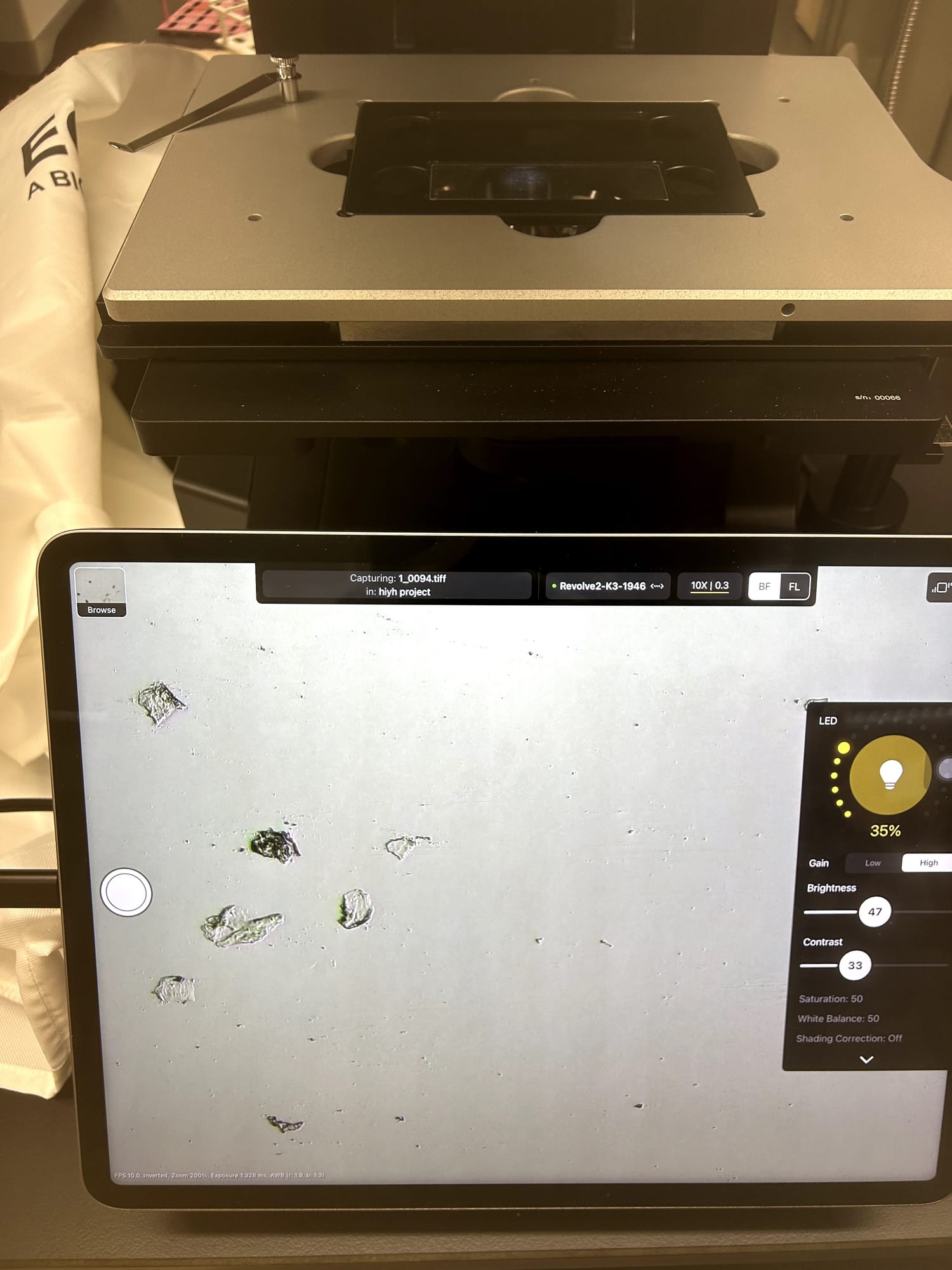
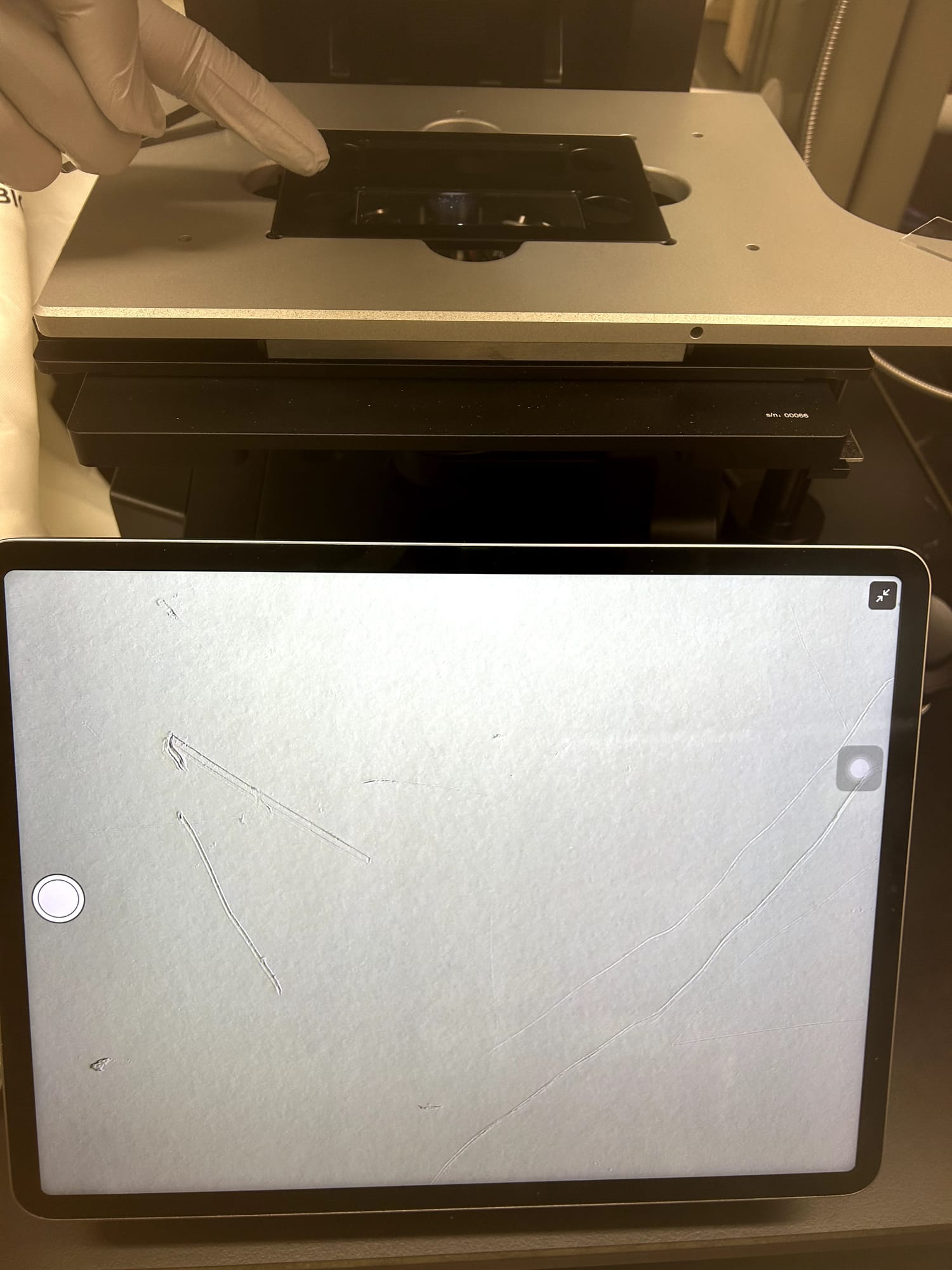
One step closer to a sustainable solution. Next: swapping the commercial polycarbonate filters (single-use, and the reason the per-test cost is $1.20 when a 500-count kit costs $600) for a reusable filter of our own. That’s the nylon experiment, and eventually the SchistoFilter card.
Take the lab out of the test
Every piece we can make cheaper, sturdier, or reusable is a piece that can travel farther. Thank you for backing the experiments that get us there.