Field results from Nigeria: communities can diagnose their own disease
Dear supporters: thanks to you, we’ve completed our field study in rural Nigeria, and I’m thrilled to share our preliminary findings.
Your contributions made it possible to test whether smartphones and paper microscopes could transform how communities detect schistosomiasis, a parasitic disease affecting roughly 240 million people worldwide that can lead to bladder and cervical cancer. Before anything else, we want to say thank you to the community health worker team, first and foremost.
Nearly a third of people, and no test
In the villages around the Oyan River Dam, nearly 30% of the people we tested carried this parasite with an active sign of infection: eggs in the urine. Yet most had never had access to a diagnostic test, because conventional microscopes are expensive, need electricity, and require trained lab technicians — resources that simply don’t exist in these remote communities.
The current gold-standard test costs about $1.50 per person, before counting the equipment and power it needs. Even then, samples often have to travel to distant labs, with results taking days to come back. Meanwhile, infected people keep suffering the disease’s effects — and the parasite keeps cycling back into the water.
Two tools
The toolkit
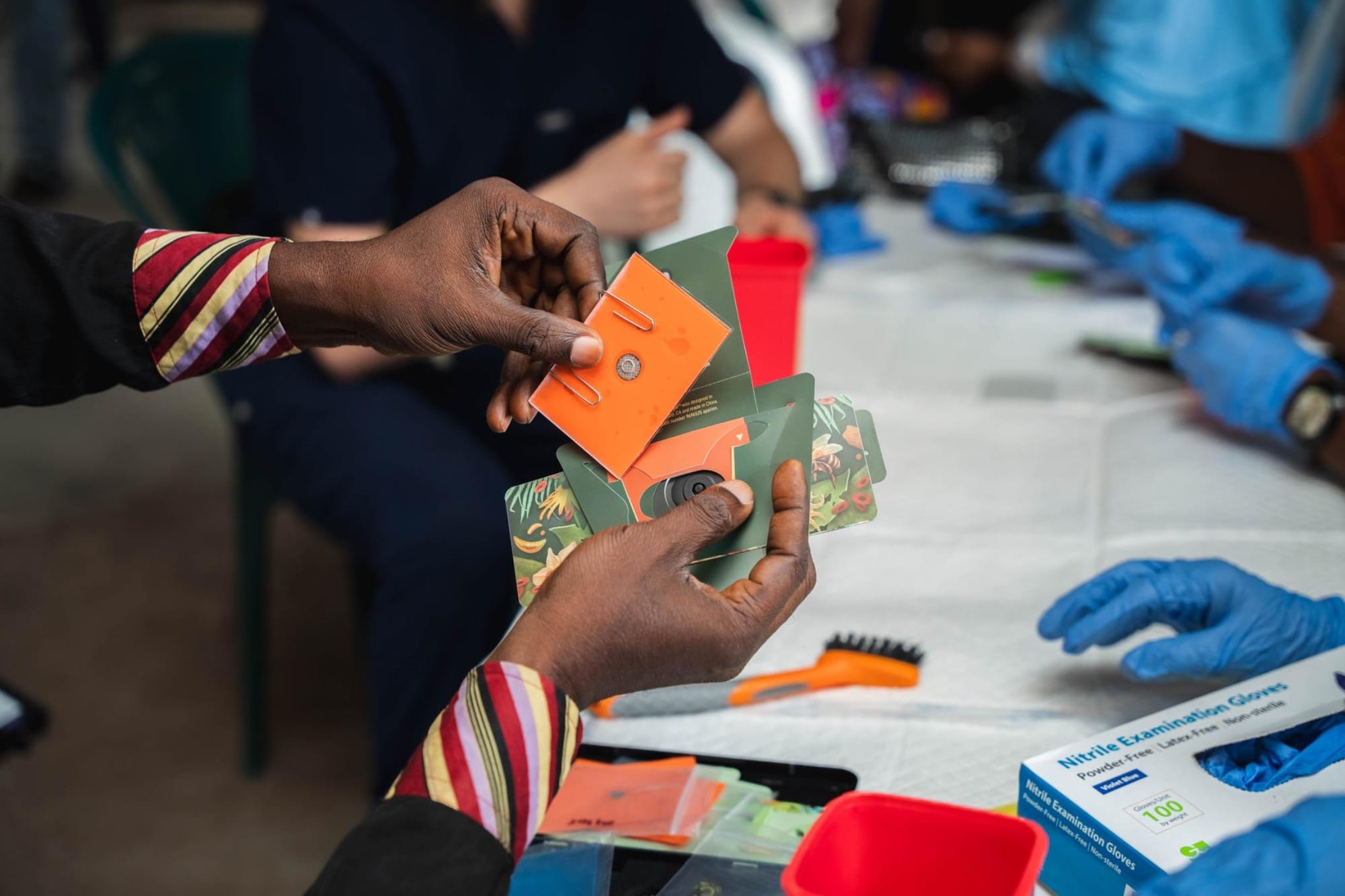
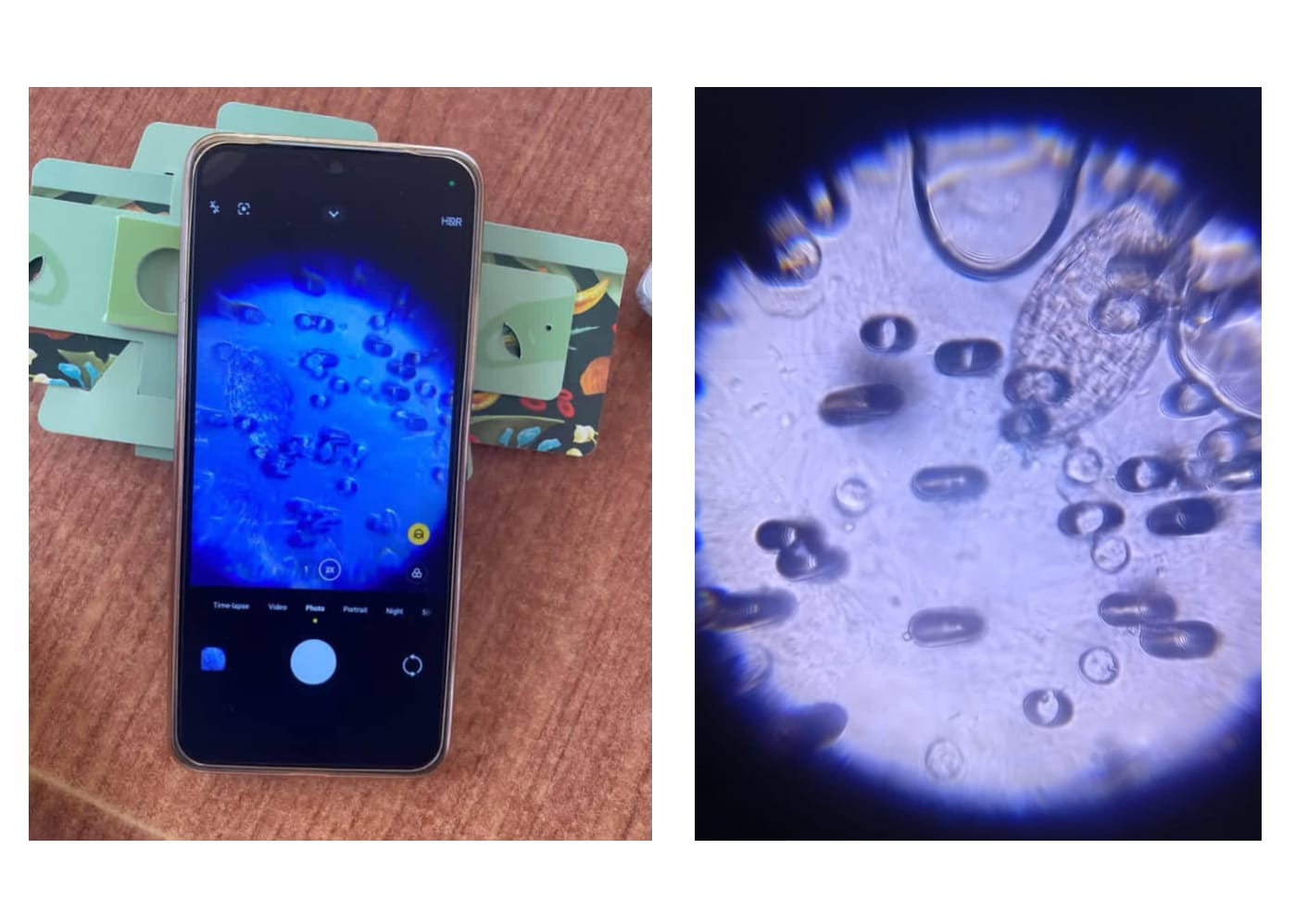
The Foldscope
A $2.50 paper microscope that connects to any smartphone.
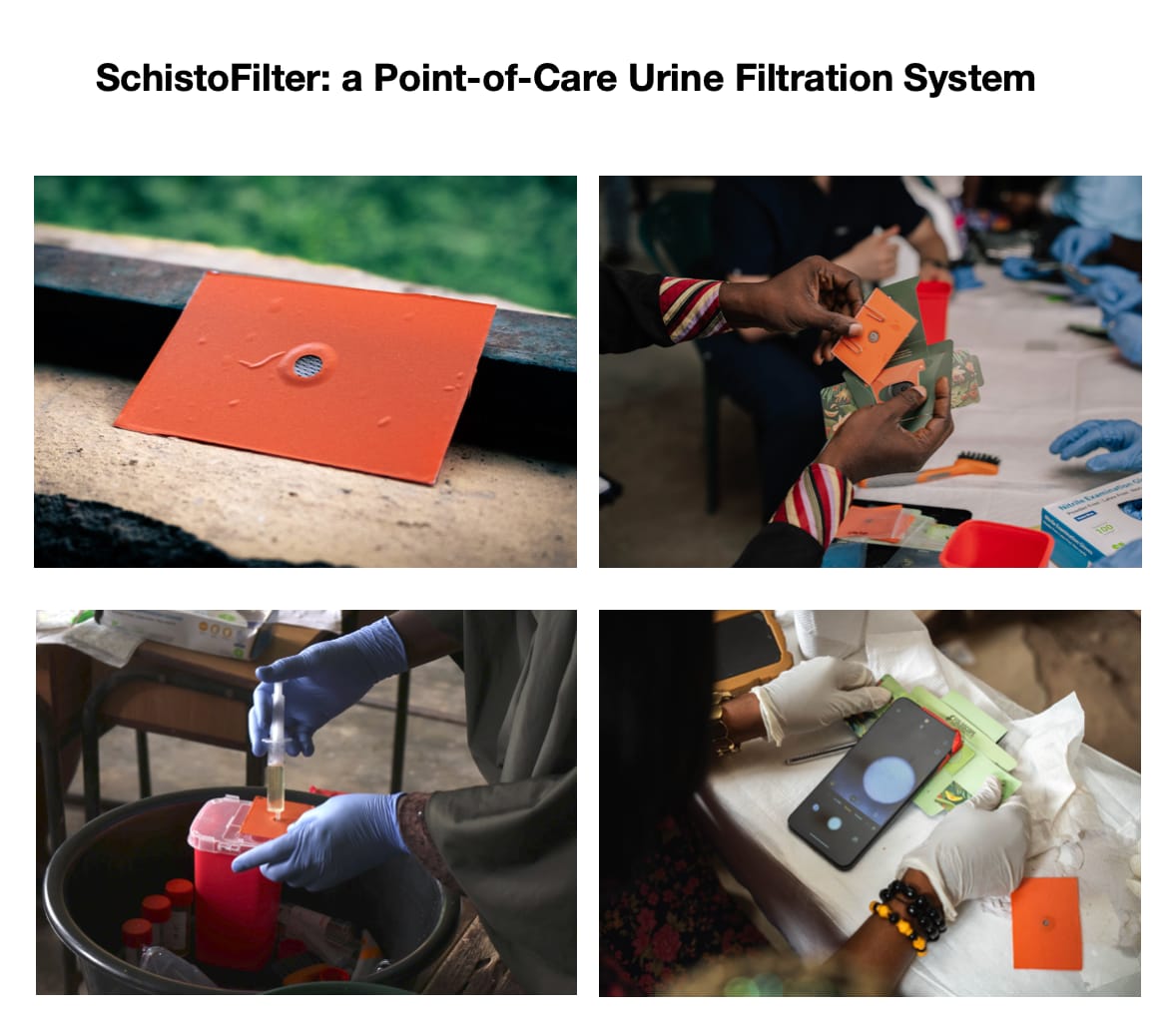
The SchistoFilter
A reusable device we developed that concentrates parasite eggs from urine — no electricity or expensive supplies required.
The Foldscope works
When trained local laboratory scientists used the Foldscope to read 418 urine filters, they achieved 91% sensitivity (correctly identifying infected people) and 99% specificity (correctly identifying uninfected people). That matches the performance of conventional microscopes.
Community health workers can do this
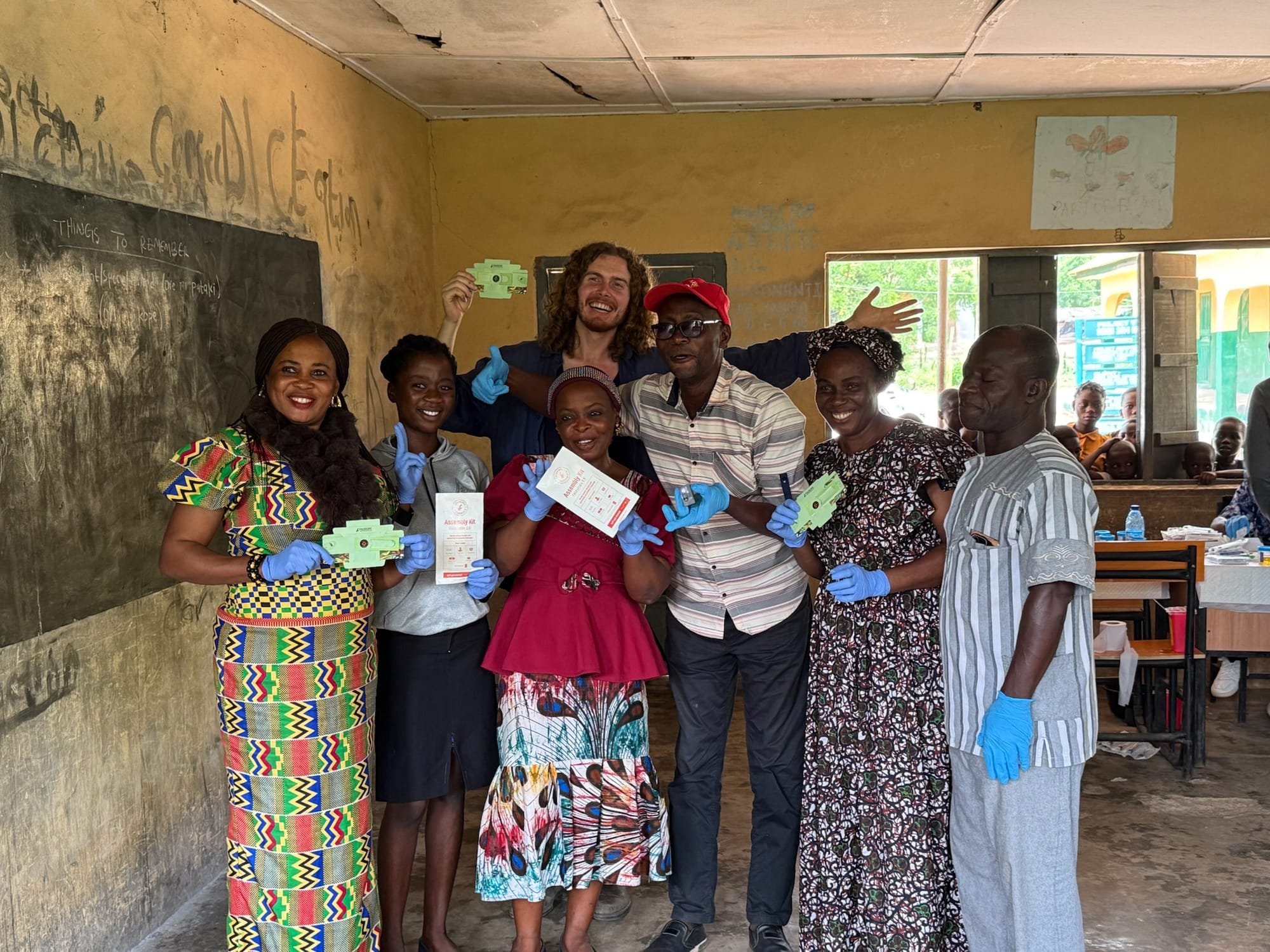
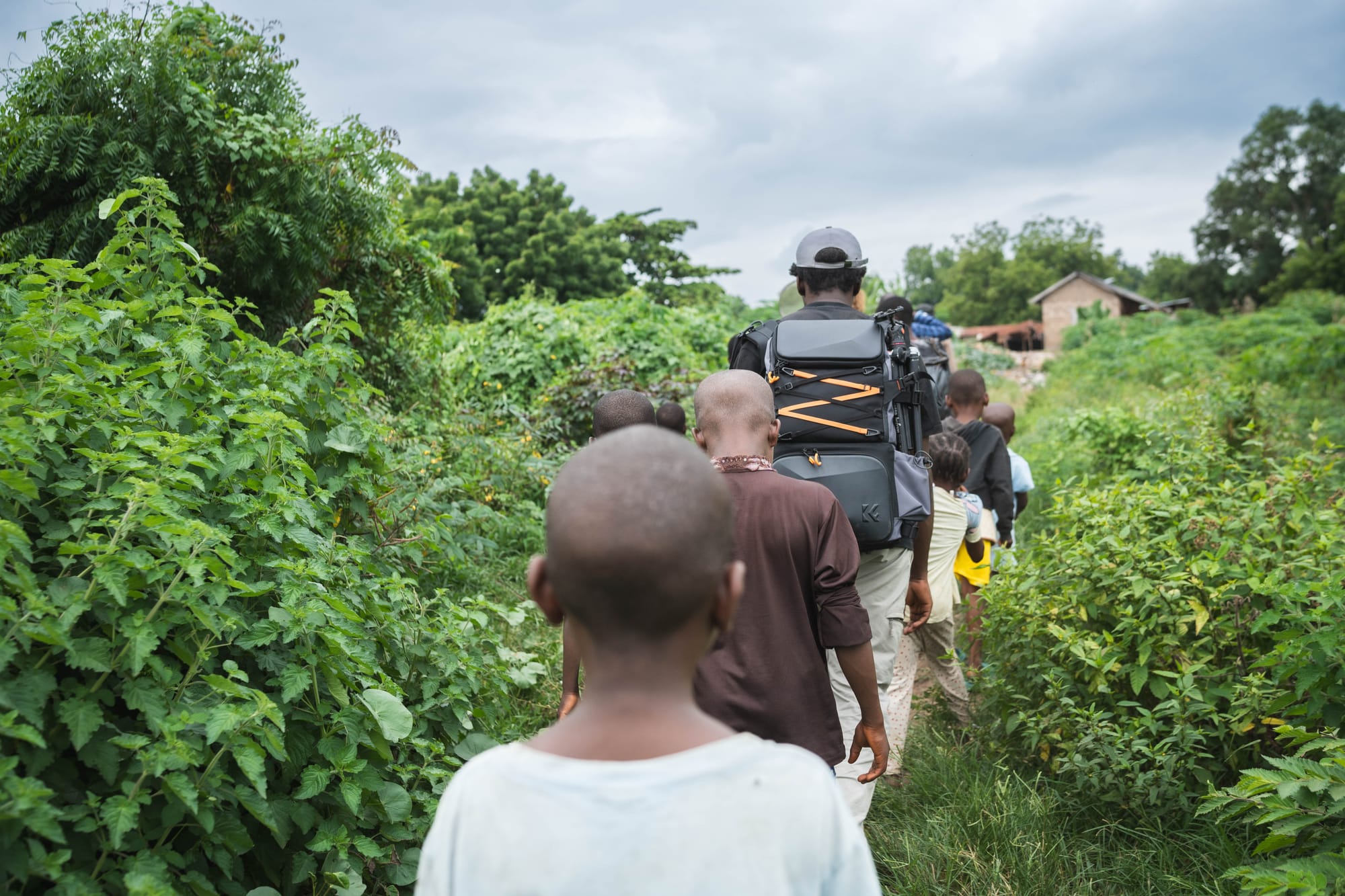
We trained eight community health extension workers (CHEWs), people already trusted in their villages, to use these tools. Over eight days, we tested 418 people across five villages, and 405 people received treatment. After several days of hands-on training in the field, the CHEWs’ reads of 180 samples were recorded and compared against the gold-standard test. Here’s where it gets really exciting: they improved dramatically with practice.
CHEW sensitivity, village by village
By their third deployment, health workers who had never used a microscope before reached 90.8% overall accuracy, at about 11 minutes per sample — fast enough for same-day diagnosis and treatment.
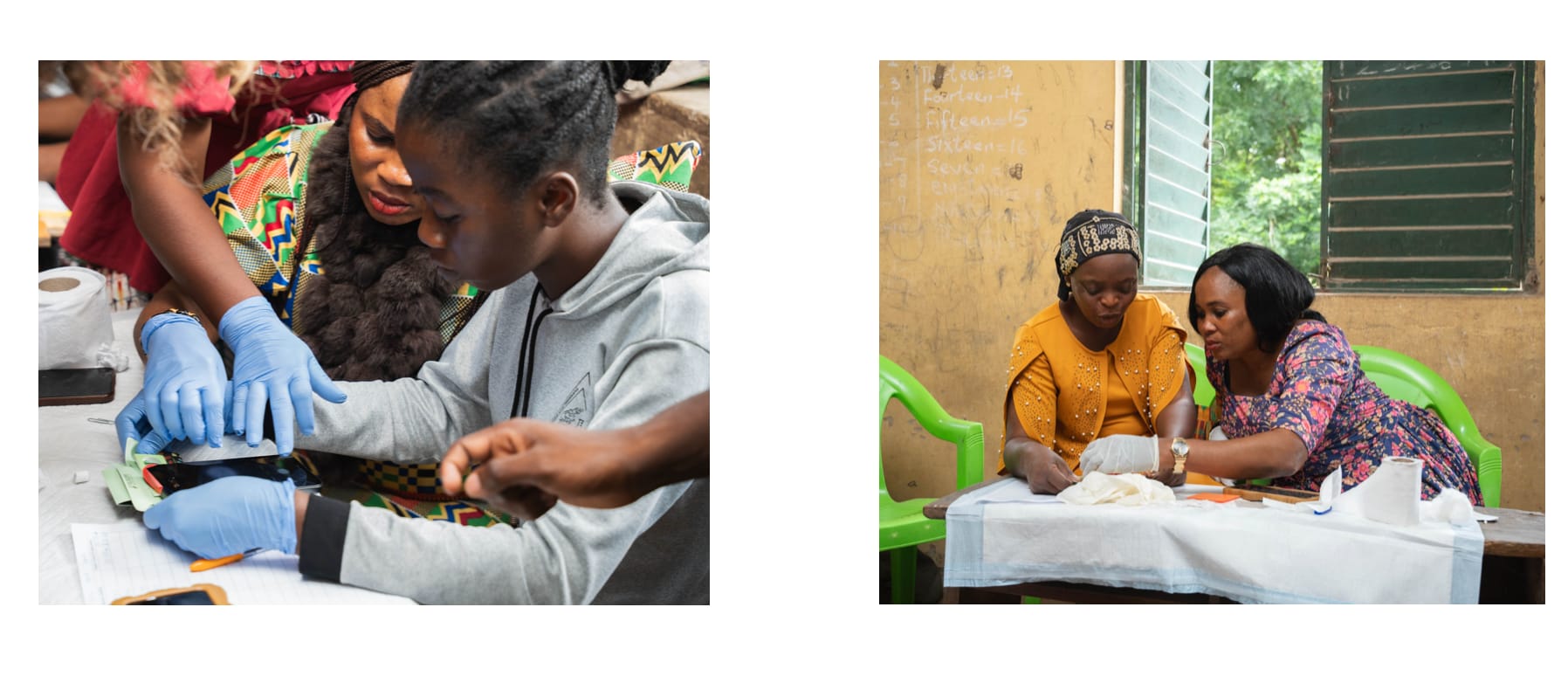
In interviews, the health workers told us they felt confident using the tools, and saw them as improving access to testing in a cost-effective way.
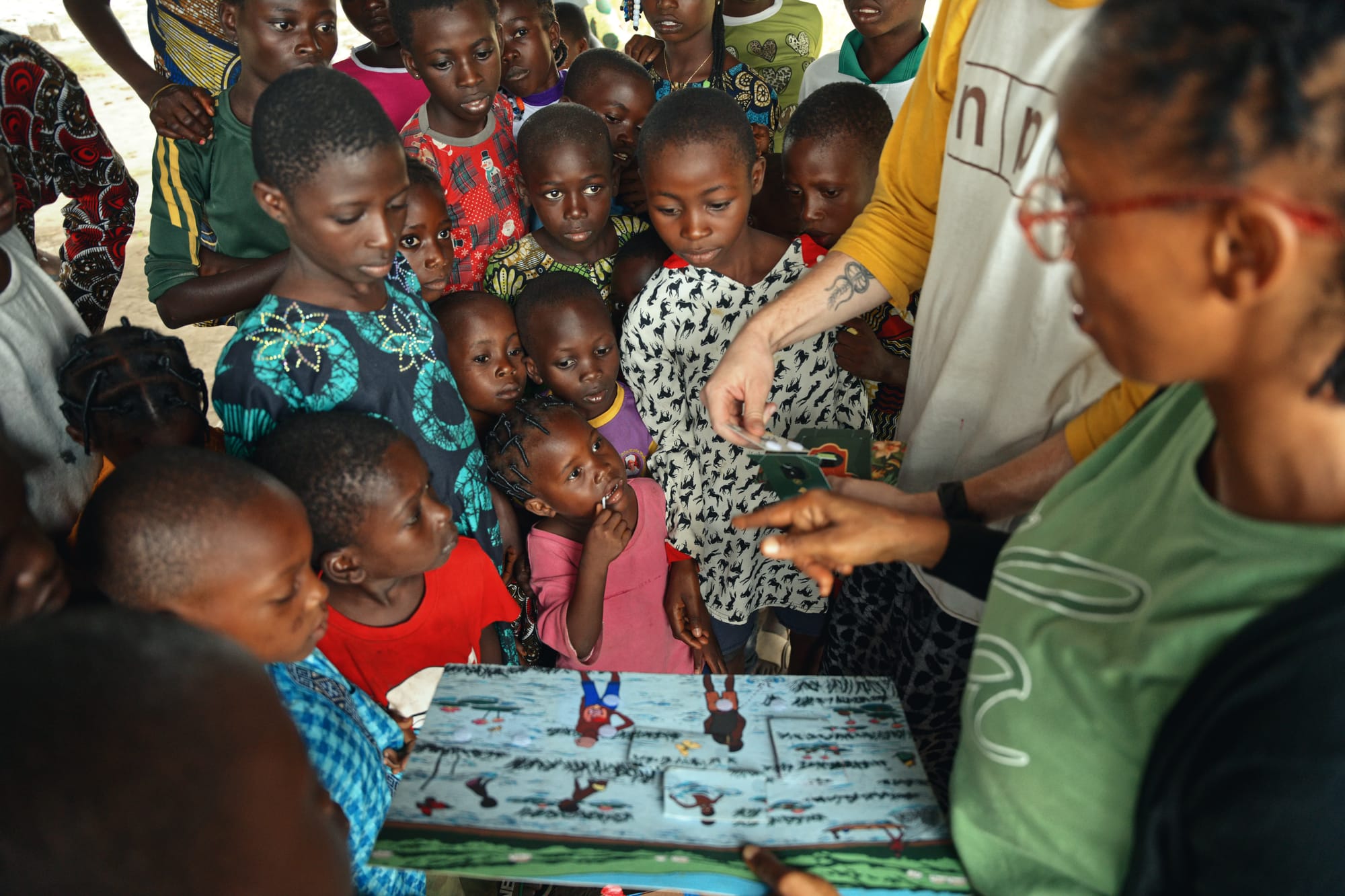
What it meant on the ground
Students’ infection rates point to the need for school-based screening.
The bigger picture
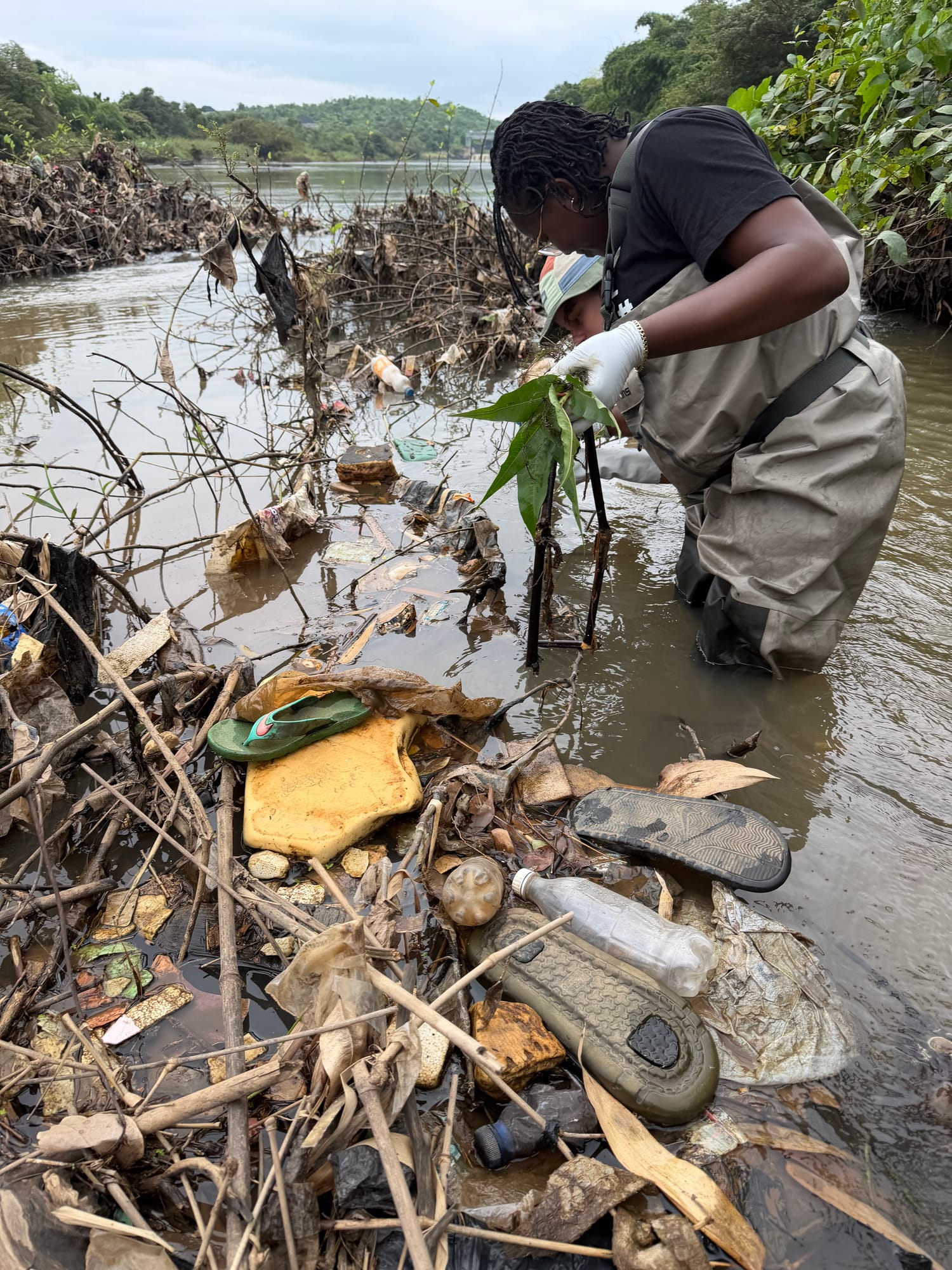
While testing diagnostics, we also mapped snail habitats by drone (the snails spread the parasite), identified environmental factors that may be sustaining transmission, and built relationships with local health authorities for sustainable implementation.
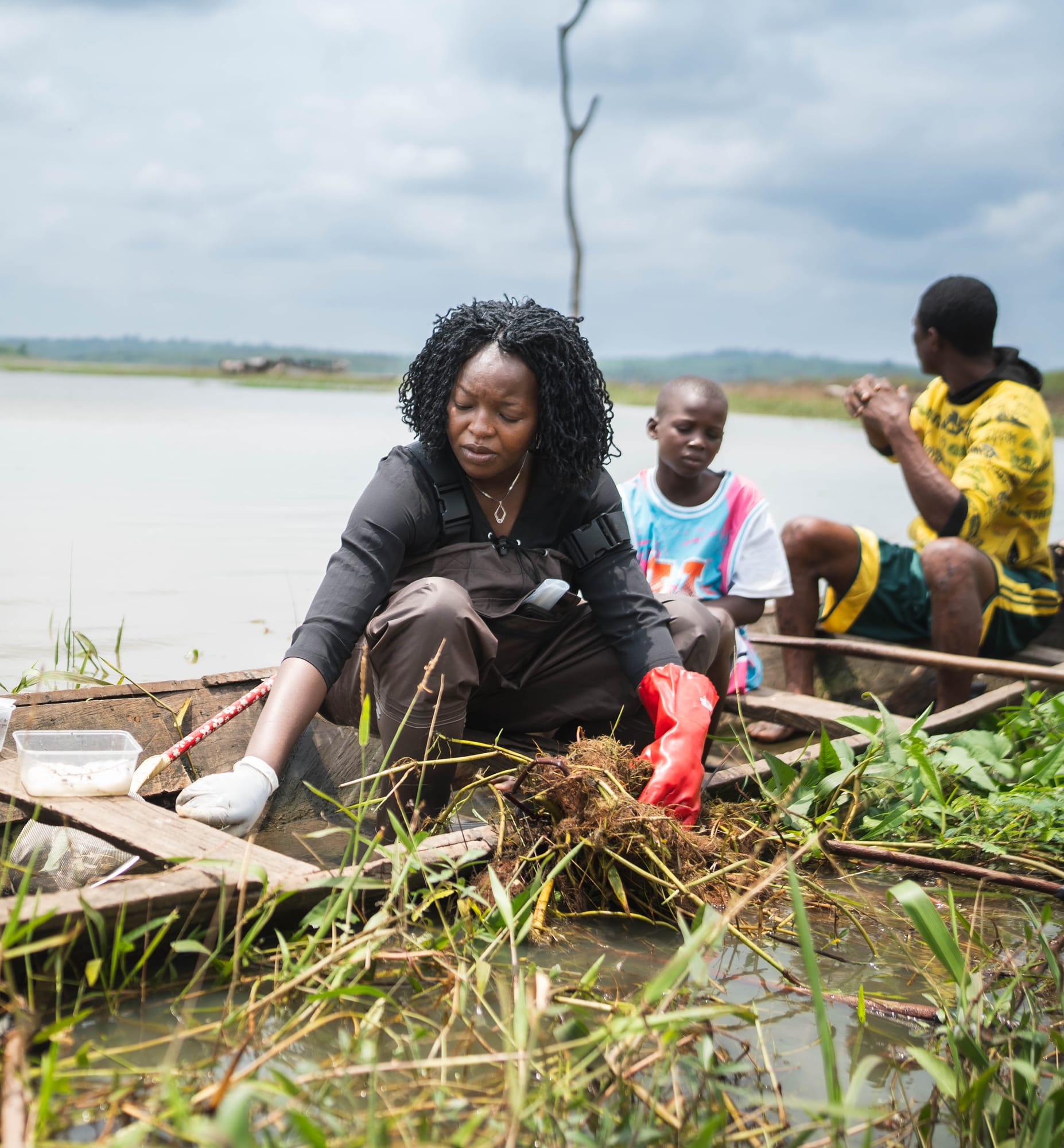
With a tool that costs less than a cup of coffee, community health workers can detect a cancer-causing parasite.
Your support has shown that communities can take disease diagnosis into their own hands. And the implications reach beyond schistosomiasis: this approach could work for other parasitic diseases, bringing diagnostic capability closer to the many people worldwide who lack access to basic laboratory services.
Challenges ahead
What still stands in the way
Supply chains
Getting Foldscopes and supplies to remote areas is still hard.
Training
Health workers need hands-on practice to reach high accuracy — the learning curve is real.
Integration
Success needs buy-in from ministries of health, not just communities.
These are solvable problems, and your support has given us the evidence to advocate for policy change. We’re now preparing manuscripts for peer review, developing training programs for wider deployment, and working with Nigerian health authorities on implementation.
Thank you to Dr. Tope Olubodun, Dr. Adebayo Adeniyi, Dr. Dola, Dr. Soneye, Prof. Ekpo, Ifeoluwa George, Nifemi, Mrs. Maryam Kafil-Emiola, and so many more. From the villages of the Oyan River Dam and our research team across Nigeria, Texas, and California: thank you for believing that science can be democratized. You are truly part of this research team.
This is what your support made possible
When you backed “How Can Phones & Drones Help Stop a Cancer-Causing Parasite?”, you took a leap of faith on an unconventional idea. Every one of the 405 people treated is a life improved and a transmission chain broken. This is just the beginning.