 Ogun State
When we first met Dr. Uwem Ekpo, it became clear there’s more than one way to tackle schistosomiasis.
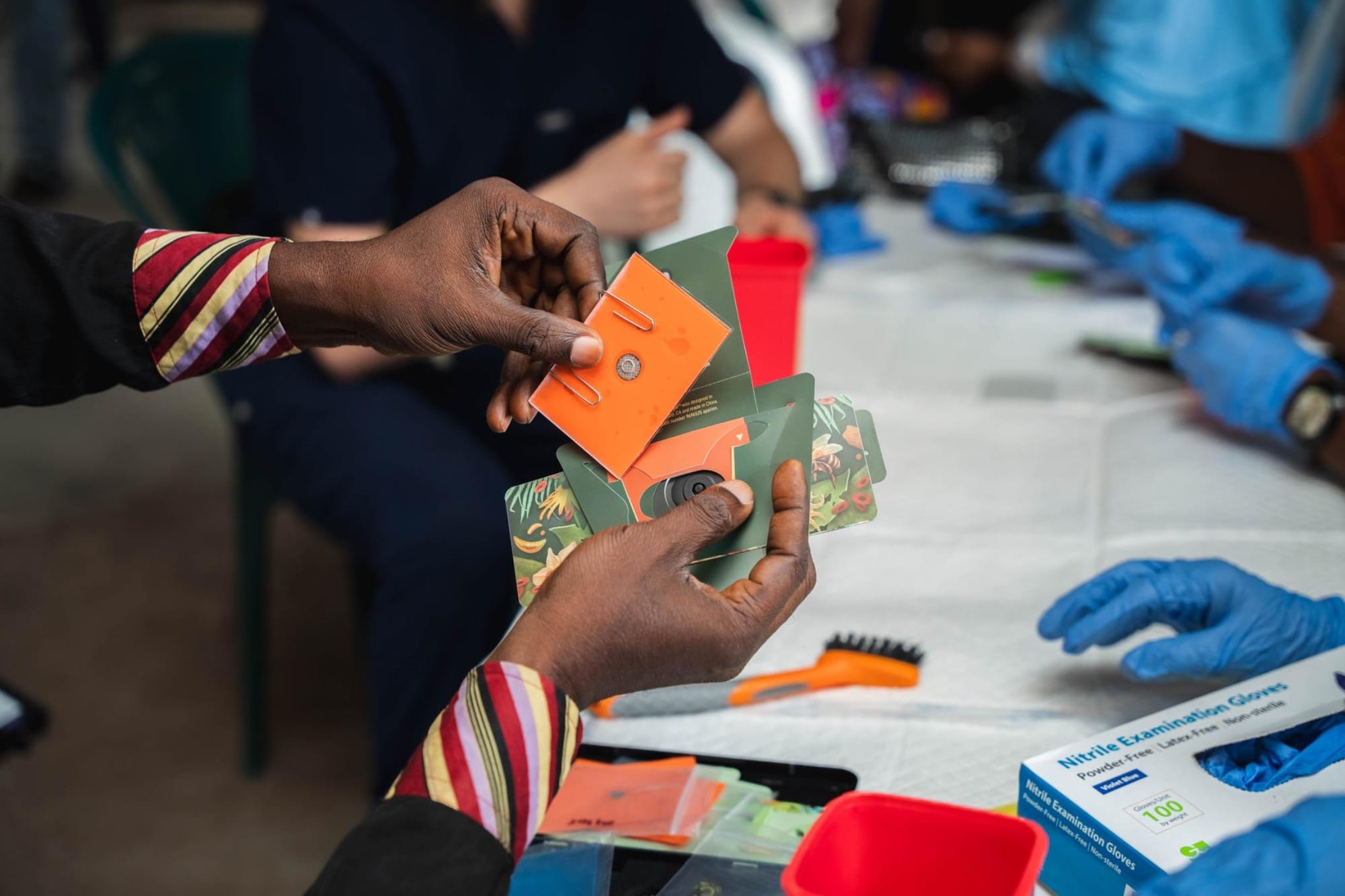
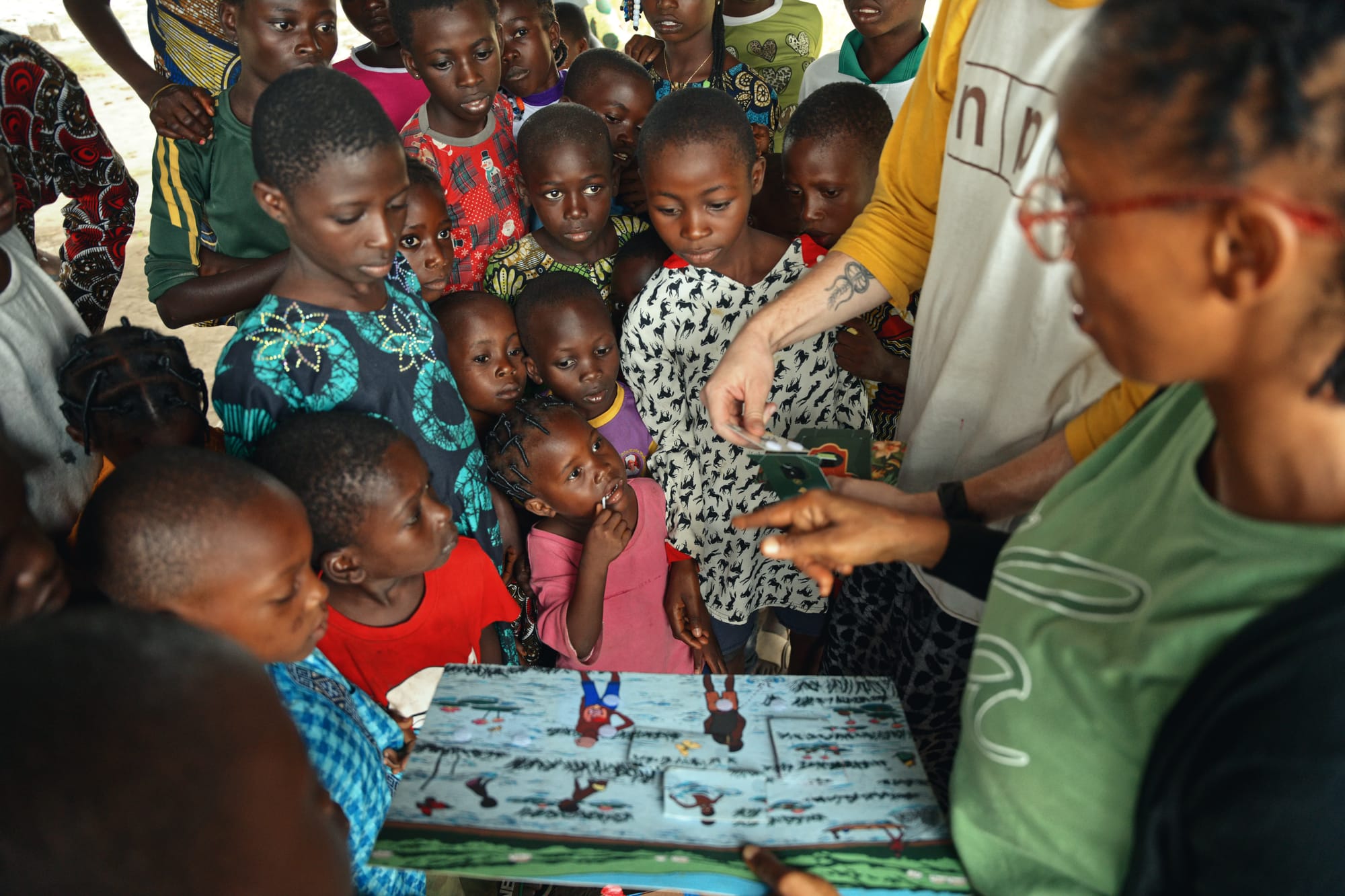
Prof. Ekpo’s team built Schisto & Ladders, a board game that teaches children in endemic areas how the disease spreads, and its signs and symptoms. Dr. Manu Prakash, with whom we’ve had the pleasure to work, co-invented the Foldscope, an origami microscope now used in schools around the world to bring the microscopic to life for children, in their own hands.
Dr. Prakash suggested we build a visual language into our project. That could take the form of a booklet teaching the themes that matter most with schistosomiasis: bloody urine means infection; safe treatment exists; freshwater can infect you. Paired with a Foldscope, it could engage schoolchildren — and their families, friends, and siblings — and spark curiosity about a problem they’re best placed to solve.
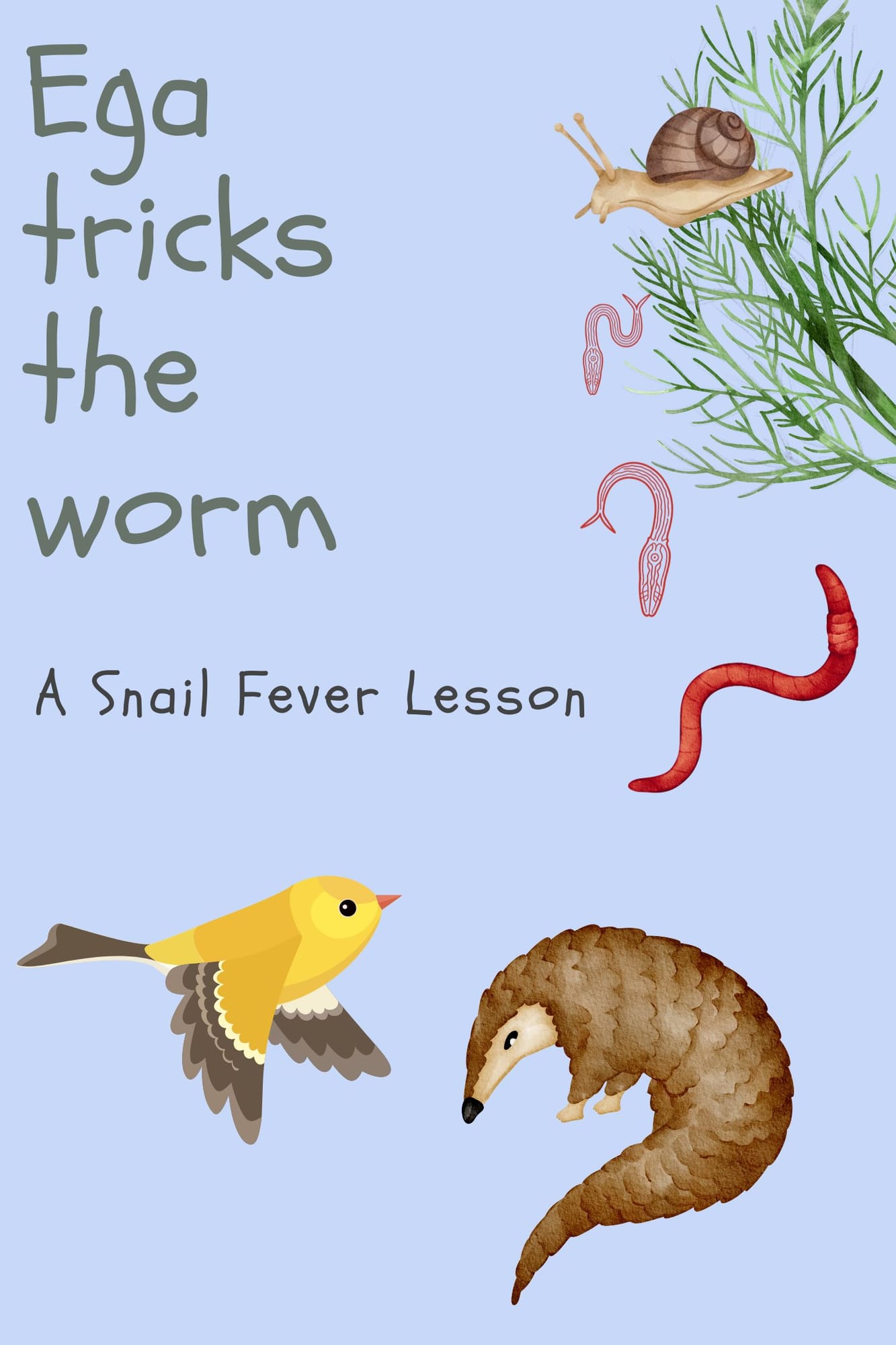
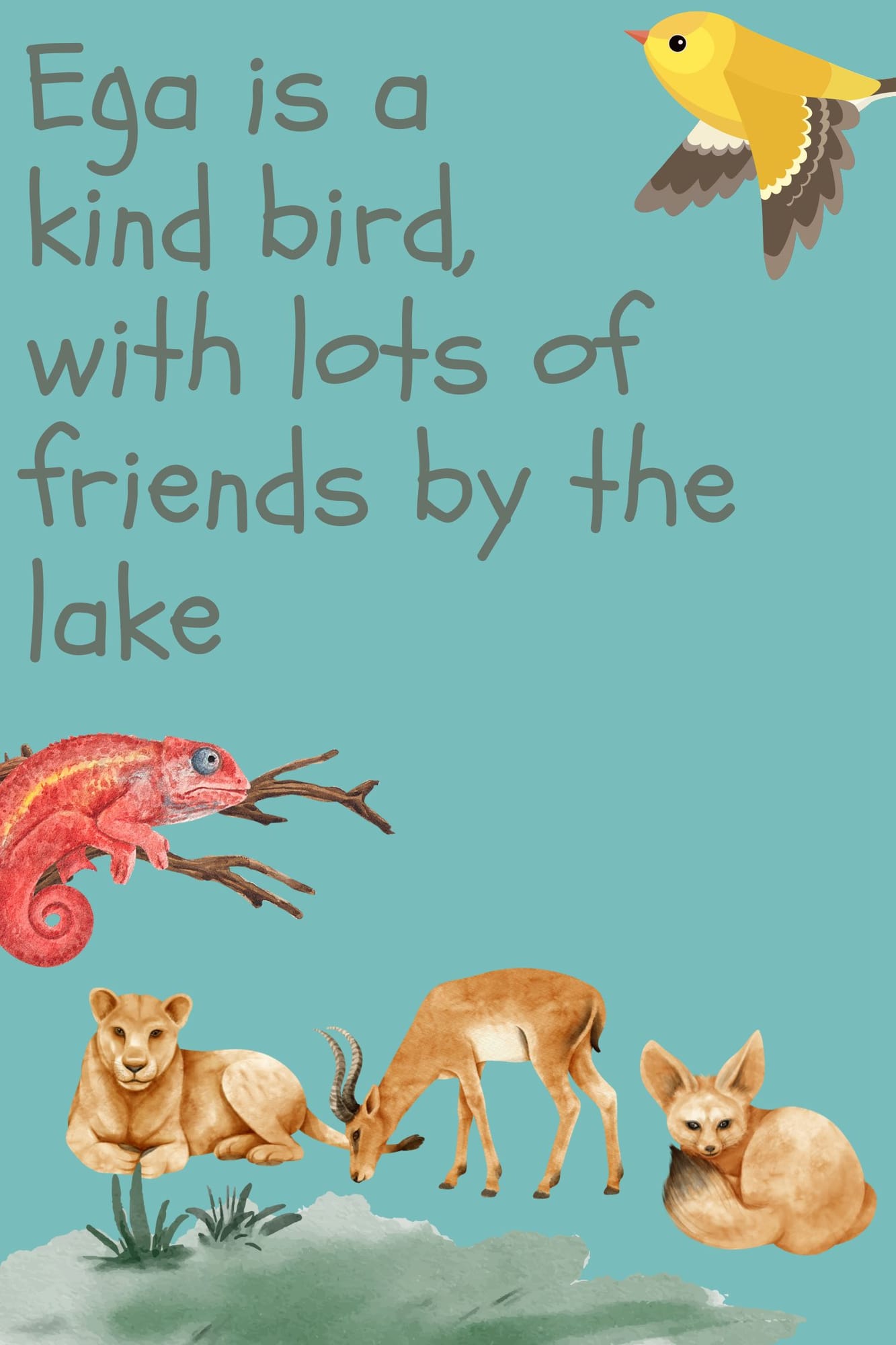
A yellow bird outsmarts a worm
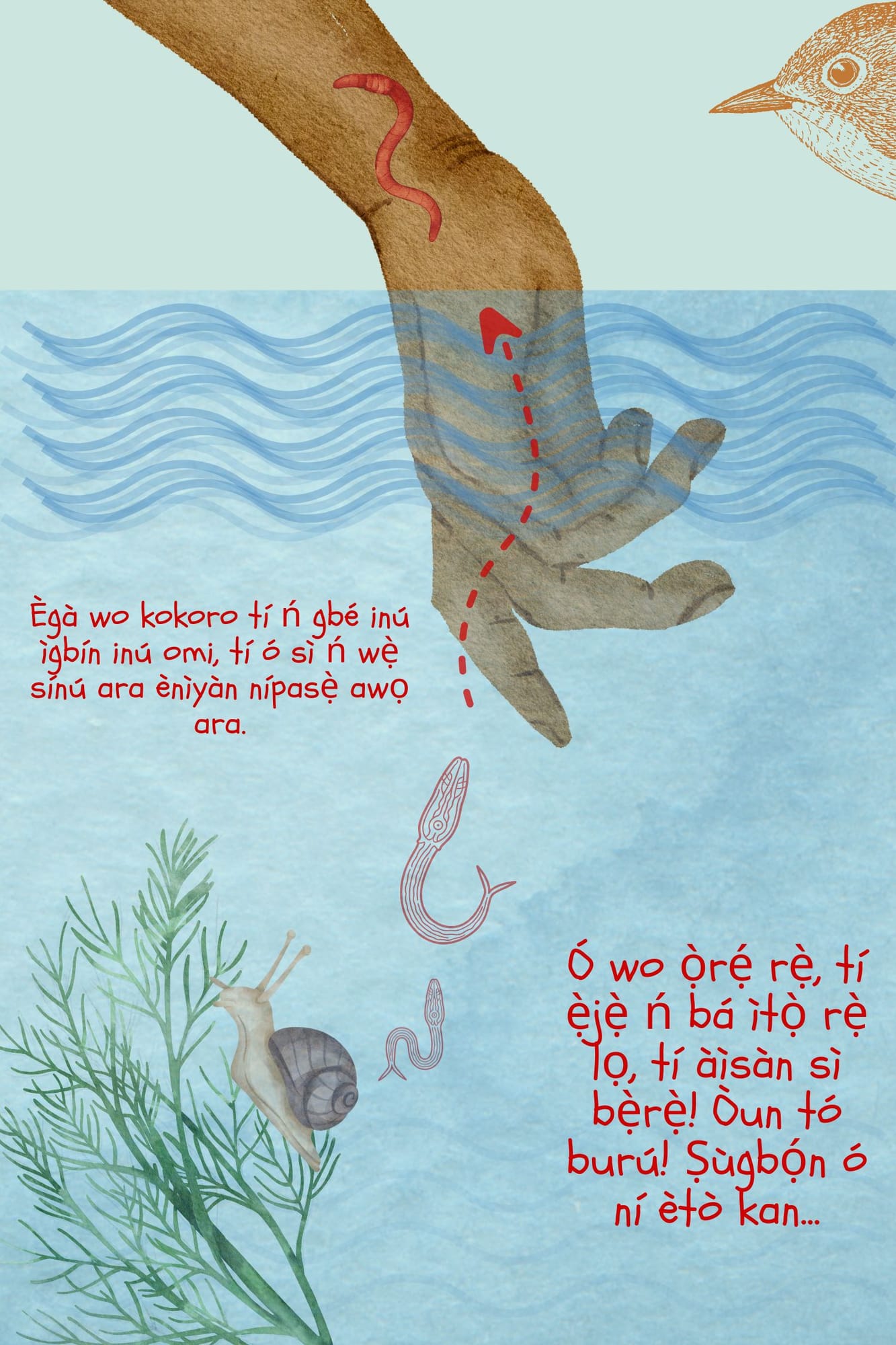
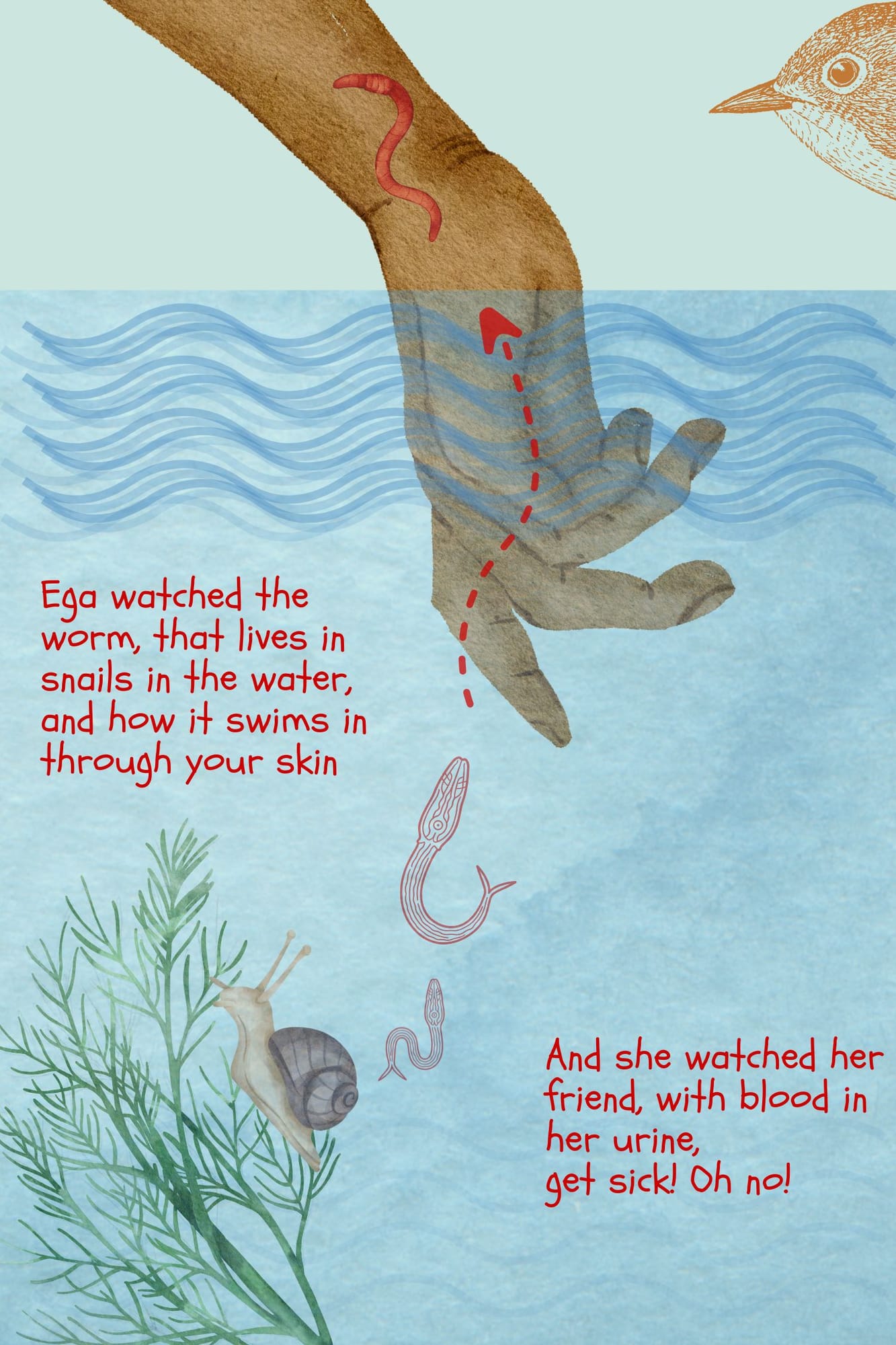
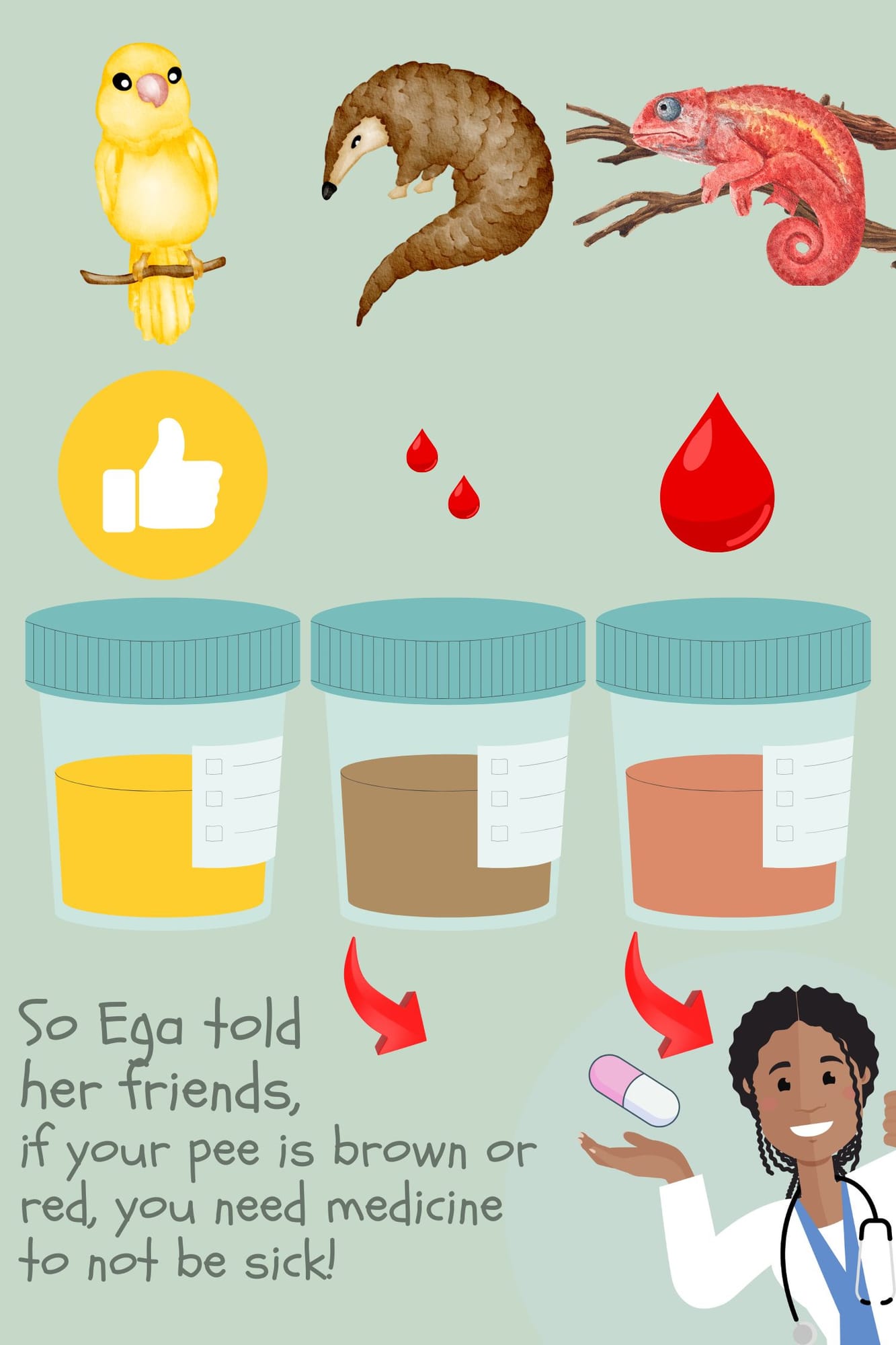
The story, written for kids ages 6 to 11, centers on Ega, a yellow bird who outsmarts the parasitic worm by telling her friends what leads to infection, when you need treatment, and why it matters. Its evidence-based elements are the route of infection (through the skin, in the water) and recognizing hematuria (blood in the urine) by the color of your pee. We planned it bilingual, in Yoruba and English.
Why a yellow bird?
Ega is a yellow warbler: a visual reminder of what healthy urine looks like. There’s good evidence behind the color lesson. One published field study found a strong correlation between urine color and intensity of S. haematobium infection (r = 0.72): of 356 light-yellow samples, 95.8% were negative for eggs, while 85% of blood-brown samples showed heavy infection.
The kids who live alongside this disease are the brightest minds able to solve it.
We welcomed advice and new angles as we refined the story. What we learned from it carried straight into our next idea: reimagining a beloved game as something interactive and larger than life. A year later, that became Hidden Worlds, a puzzle where every piece is a microscope slide, now played monthly in the SCOPE communities.
Sources & further reading
- Urine colour and intensity of Schistosoma haematobium infection. The Internet Journal of Tropical Medicine, vol. 6, no. 1. ispub.com ↗
- NPR — Move over Chutes & Ladders: Schisto & Ladders has educational value plus worms, July 4, 2026. npr.org ↗
Teach the life cycle, break the life cycle
Stories and games are how a child learns to read the water — and their own health. Help us keep building them with the communities we serve.