Experiment 1: can a first-timer find a parasite egg?
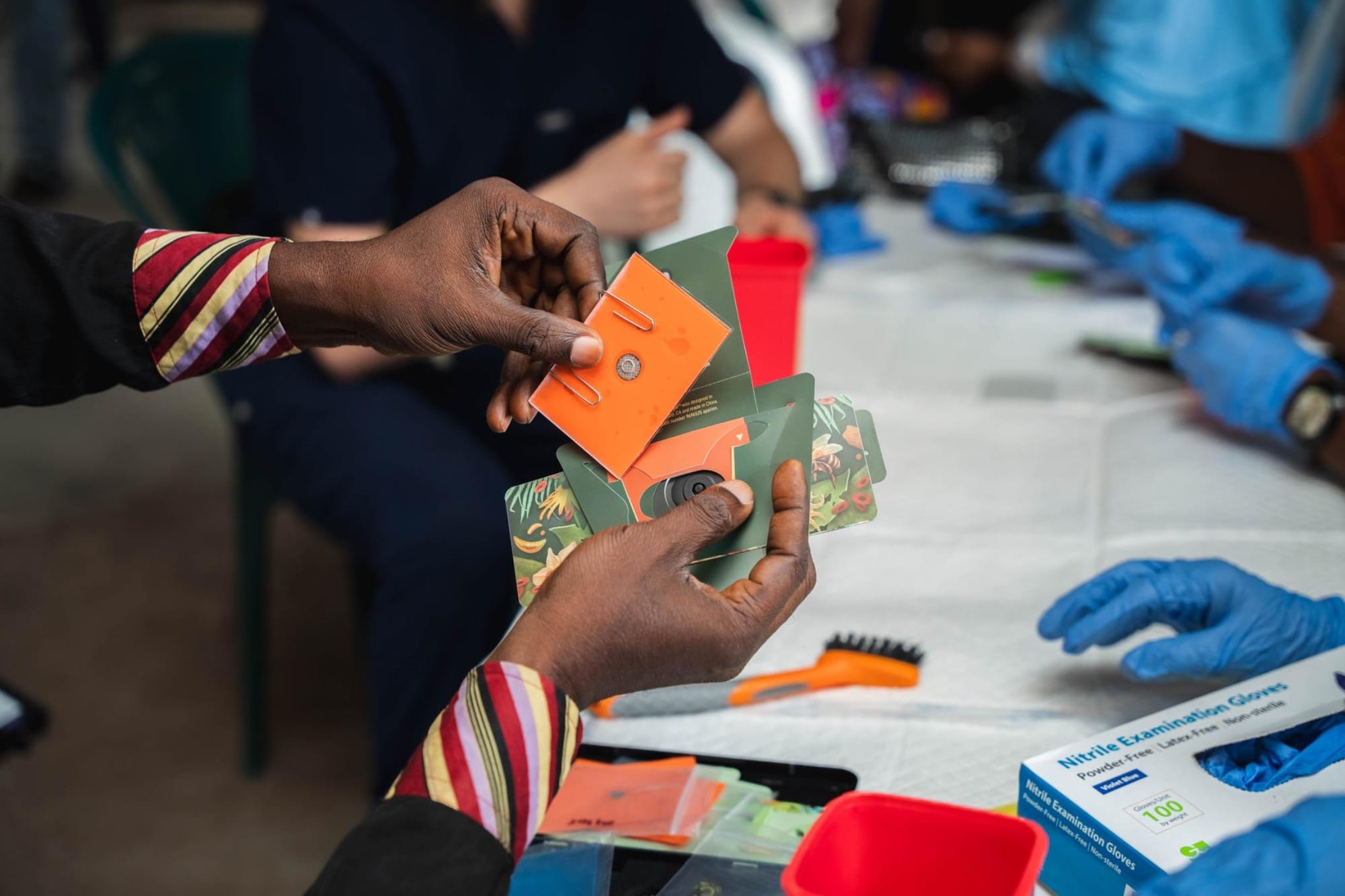
Before asking community health workers to diagnose schistosomiasis with a $2.50 paper microscope, we asked a simpler question: can someone who has never used a microscope find a parasite egg at all?
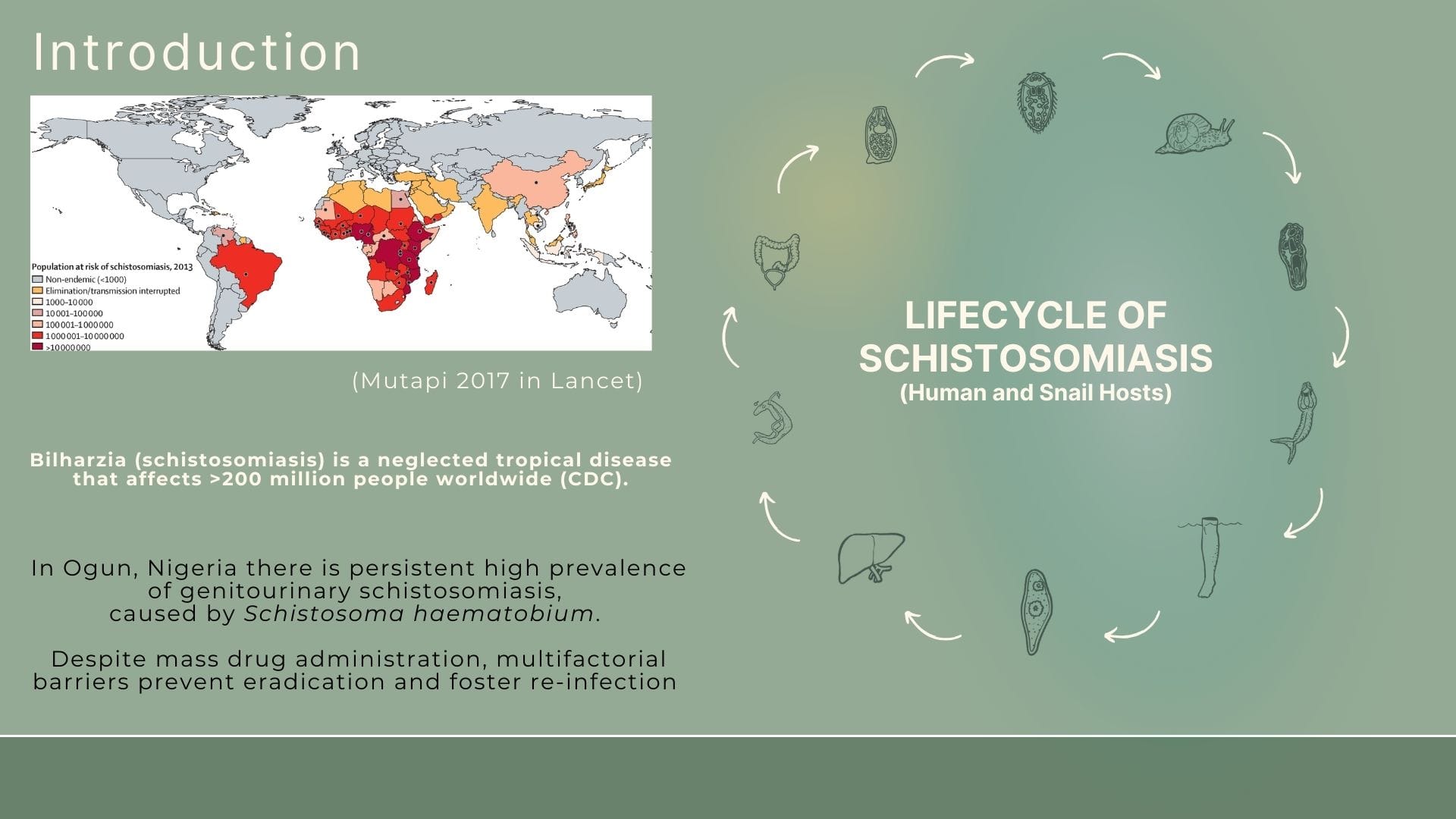
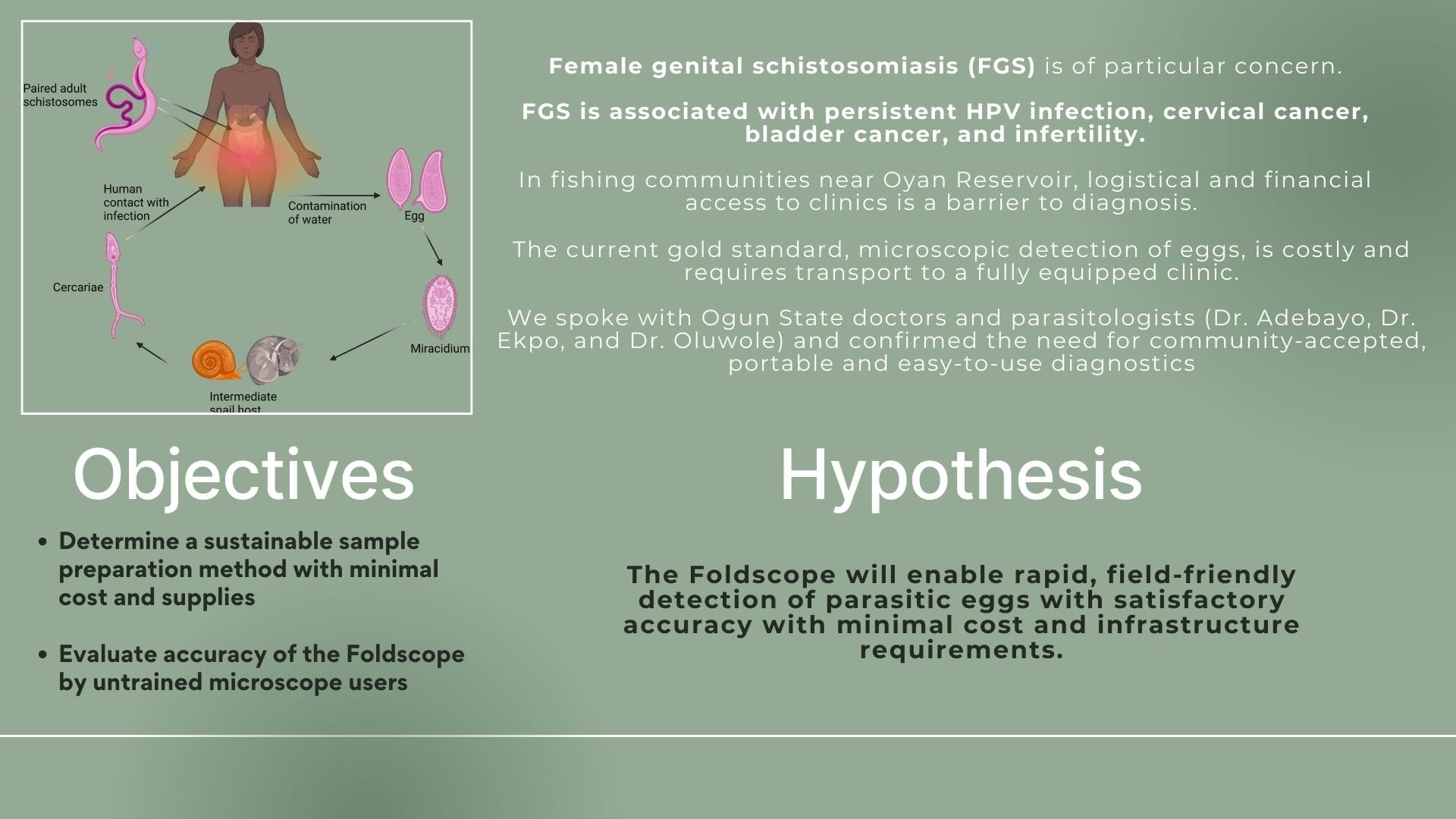
Bilharzia (schistosomiasis) is a neglected tropical disease that affects more than 200 million people worldwide. In Ogun State, Nigeria, genitourinary schistosomiasis caused by Schistosoma haematobium stays stubbornly common: despite mass drug administration, tangled barriers keep it from being eliminated and keep people getting reinfected.
Why a test that travels
Female genital schistosomiasis (FGS) is of particular concern: it’s associated with persistent HPV infection, cervical cancer, bladder cancer, and infertility. In the fishing communities near the Oyan Reservoir, the logistics and cost of reaching a clinic are themselves a barrier to diagnosis. And the gold standard, spotting eggs under a microscope, is costly and requires transport to a fully equipped clinic. When we spoke with Ogun State doctors and parasitologists — Dr. Adebayo, Dr. Ekpo, and Dr. Oluwole — they confirmed the need for diagnostics that are community-accepted, portable, and easy to use.
What we set out to do
Find a sustainable sample prep
A preparation method with minimal cost and supplies.
Measure novice accuracy
How accurately untrained microscope users can read the Foldscope.
Our hypothesis: the Foldscope will enable rapid, field-friendly detection of parasite eggs, with satisfactory accuracy, at minimal cost and infrastructure.
Twenty-four blinded slides
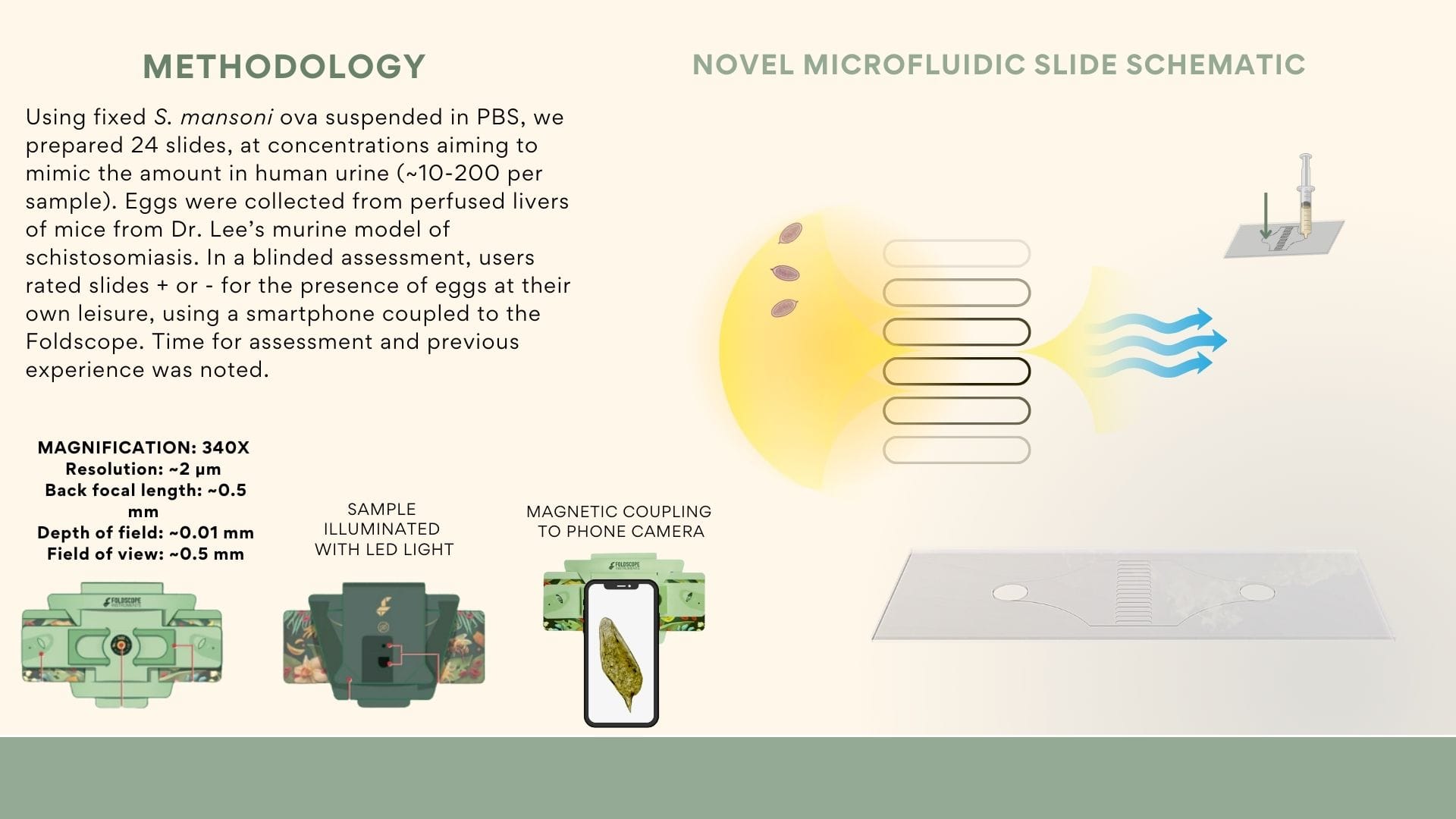
Using fixed S. mansoni eggs suspended in saline, we prepared 24 slides at concentrations meant to mimic human urine, roughly 10 to 200 eggs per sample. The eggs came from Dr. Jayhun Lee’s murine model of schistosomiasis. In a blinded assessment, users rated each slide positive or negative for eggs, at their own pace, using a smartphone coupled to the Foldscope. We noted how long each assessment took, and each person’s previous microscope experience.
79% accuracy, in about four minutes
How the calls broke down
| 24 slides | Called positive | Called negative |
|---|---|---|
| Actually positive (18) | 13 (true positive) | 5 (false negative) |
| Actually negative (6) | 0 (false positive) | 6 (true negative) |
Precision (positive predictive value) 100%; F1 score 83.7%.
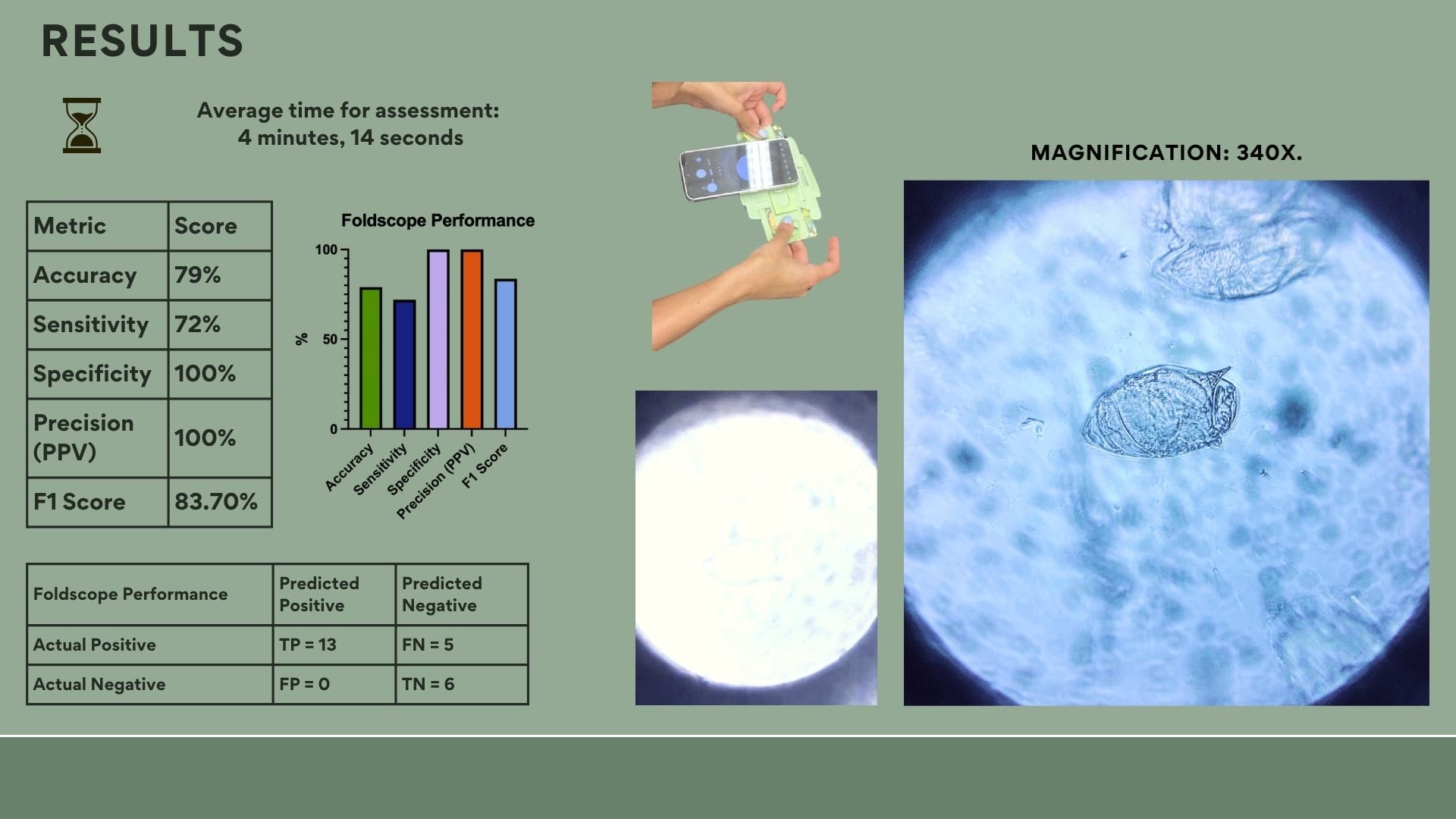
Every mistake was a miss, not a false alarm — novices never saw an egg that wasn’t there. That pointed us straight at the next problem: concentrating the eggs, so there’s less haystack to search.
A starting line
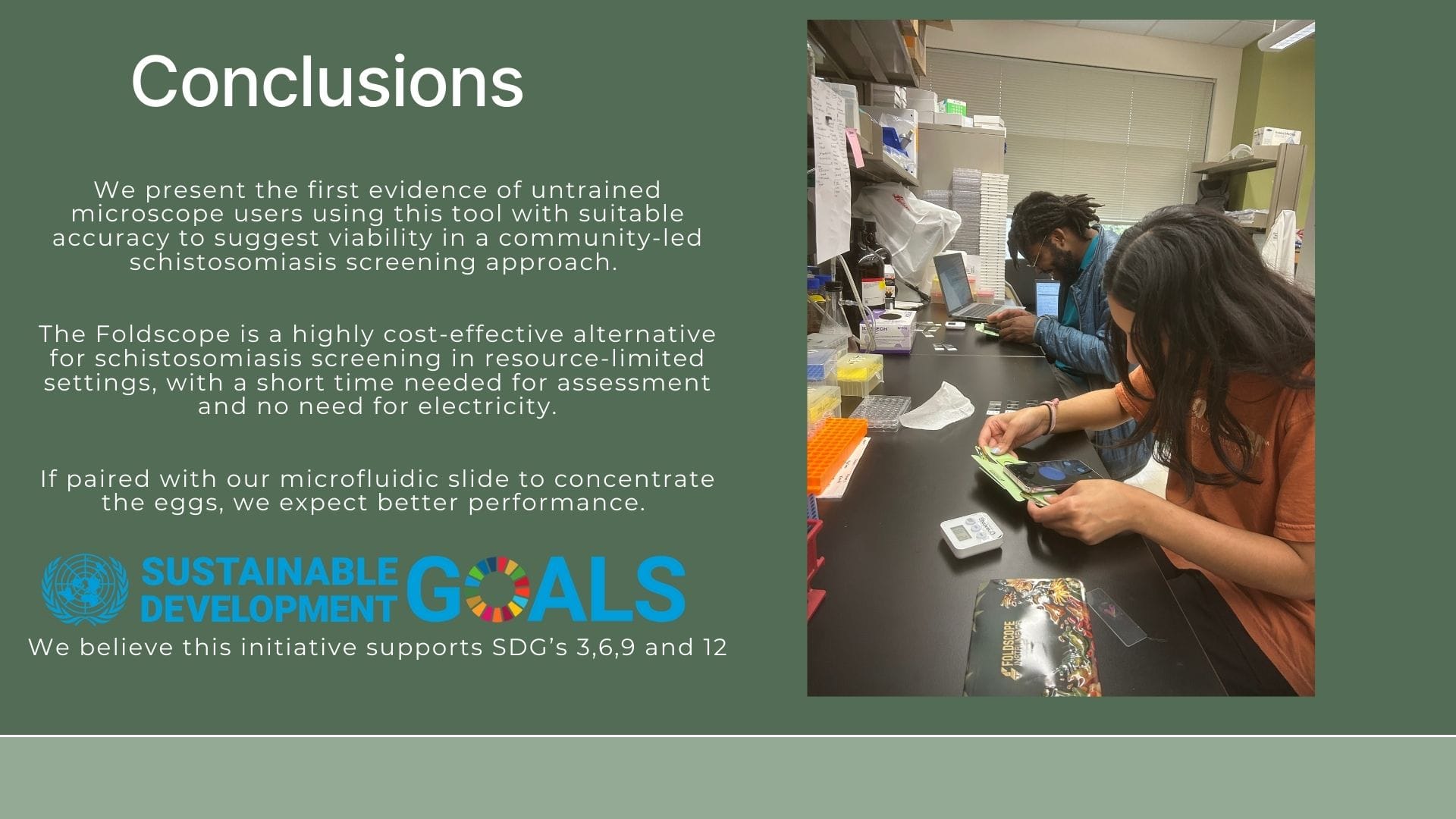
This was the first evidence we’d seen that untrained users could read the Foldscope accurately enough to suggest a community-led screening approach could work. The Foldscope is a highly cost-effective alternative for resource-limited settings: assessment is quick, and there’s no need for electricity. And if paired with a device to concentrate the eggs, we expected performance to improve.
Every field study starts at a lab bench
Twenty-four slides and a stopwatch were the first step toward putting diagnosis in community hands. Thank you for following from the beginning.